Showing posts with label Reading Diary. Show all posts

Sunday, November 15, 2015

Reading Diary B: Twenty-Two Goblins

Type of Underwater City
Image from Wikipedia


Notes on Twenty-Two Goblins by Arthur W. Ryder.

Fourth Goblin
A man named Hero sacrifices his son to save the king.  Then his daughter dies so he and his wife kill themselves.  When the king discovers them, he decides to kill himself too.  It's pretty cruel to sacrifice his own son, but it shows a lot of devotion.  However, I don't understand why he decided to kill himself.  I really don't understand why the king decides to kill himself.  An entire family just died to save the king's skin, so the king thinks it is a good idea to die too?  I seems like the king's death would just make the other's deaths pointless.

Fifth Goblin
A brave man, a wise man, and a clever man are all promised to a princess.  The three combine their talents to rescue the girl from a giant.  If Draupadi was able to have five husbands, than surely this girl can have three husbands too.  The king, however, thinks that the brave man should marry the girl.

Sixth Goblin
A woman, her husband, and her brother come to a temple to worship a goddess.  The brother gets the bright idea to cut off his head as a sacrifice.  Should we all just go to a temple and cut off our heads?  The husband cuts off his head when he sees what happened.  Seems like a healthy response to the loss of a loved-one.  Fortunately, the woman decides that she needs to hang herself instead of cutting her own head off.  This gives the goddess time to give the two men their lives back, except with their heads switched.  On a side note, it seems like it would be very difficult to cut off your own head.

Seventh Goblin
A king helps a prince who saved his life win two underwater cities and marry the princess of those cities. It sounds like Atlantis.

Reading Diary A: Twenty-Two Goblins

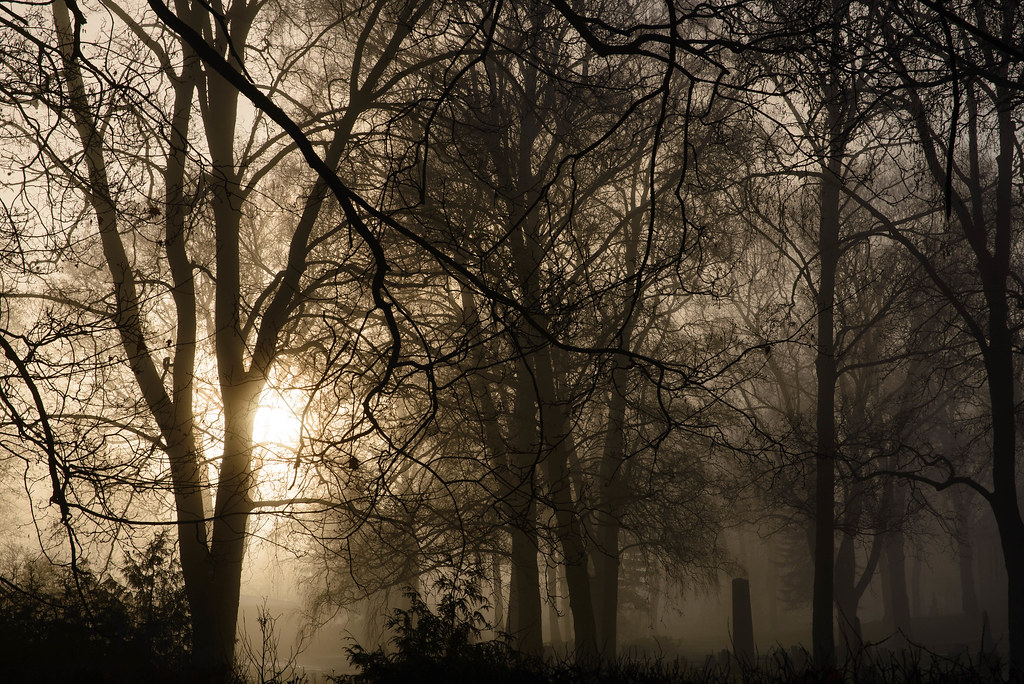
Graveyard
Image by Hege


Notes on Twenty-Two Goblins by Arthur W. Ryder.

Introduction
King receives fruits with gemstones inside from monk.  What a reward!  However, the monk asks to meet the king in the graveyard.  The monk wants the king to bring him a hanging body.  Already, this story is sounding a little creepy.  I wonder why the monk needs the body.  The body becomes possessed by a goblin that tells him the first story.

First Goblin
A prince sees a beautiful girl and falls in love with her.  However, she only speaks to him through signs that only the prince's counselor can understand.  When the prince sends am old woman to ask of the girl, the girl rejects the price, but the signs say he must wait for several days.  Already this sounds like a complicated relationship.  I don't understand why the girl only uses signs.  Then, when she weds the prince and finds that the counselor is the one who interpreted the signs, she tries to have him killed.  The counselor and prince execute a plan to get the girl banished from the city, and her parents die from grief.  Seems like all this trouble could have been spared.

Second Goblin
Mother threw son into fire for crying.  How harsh!  She sounds like a terrible mother.  But he was brought back to life by a spell.  The man who witnessed this used the magic to bring a dead girl to life.

Third Goblin
A parrot and thrush get into an argument over whether men or women are worse.  The King decides that "women are usually bad."  What a terrible statement!  Saying this would get many people's blood to boil in today's Western society.

Tuesday, November 10, 2015

Reading Diary B: Indian Fables and Folklore

Notes on Indian Fables and Folklore by Devi

Shibi sacrificed the weight of a pigeon in his own flesh to a hawk so that the pigeon might live.

Kshupa brags of his superiority over sages.  Dadhichi boxed Kshupa's ears, and Kshupa killed Dadhichi.  When Dadhichi was revived, he asked to be as hard as diamond so that he could fight Kshupa.  After much fighting, the two reconciled.

Mira is married to a Krishna toy.

The arrogant King Krishna challenged the God Krishna to fight.  The King and his follower's heads were removed with a discus.  It seems very foolish to challenge a god to fight.

Avikshita goes to the swayamvara of Vaishalini and captures her to be his bride.  The other princes fight and defeat him.  After Avikshita's father wages war to get his son back, Avikshita refuses to marry since he was defeated in combat.  This all seems like a lot of trouble for finding a wife.  How many people died in the war trying to retrive Avikshita?

Ishvarvarman lost all his money to a cunning inn keeper.  He later went back with a monkey that seemingly makes gold.  The innkeeper traded everything she owned for the monkey.  It sounds like Ishvarvarman learned his lesson.  He used a creative way to get his money back.

The "logical pupil" was sent to find a cat for his master.  Instead he brings back a boy that matches his masters description of a cat.

A poor man gets a magical pitcher that gives food.  He breaks the pitcher when he is drunk with his friends.

Bir-Vadra killed a nearly invincible giant and a dragon.

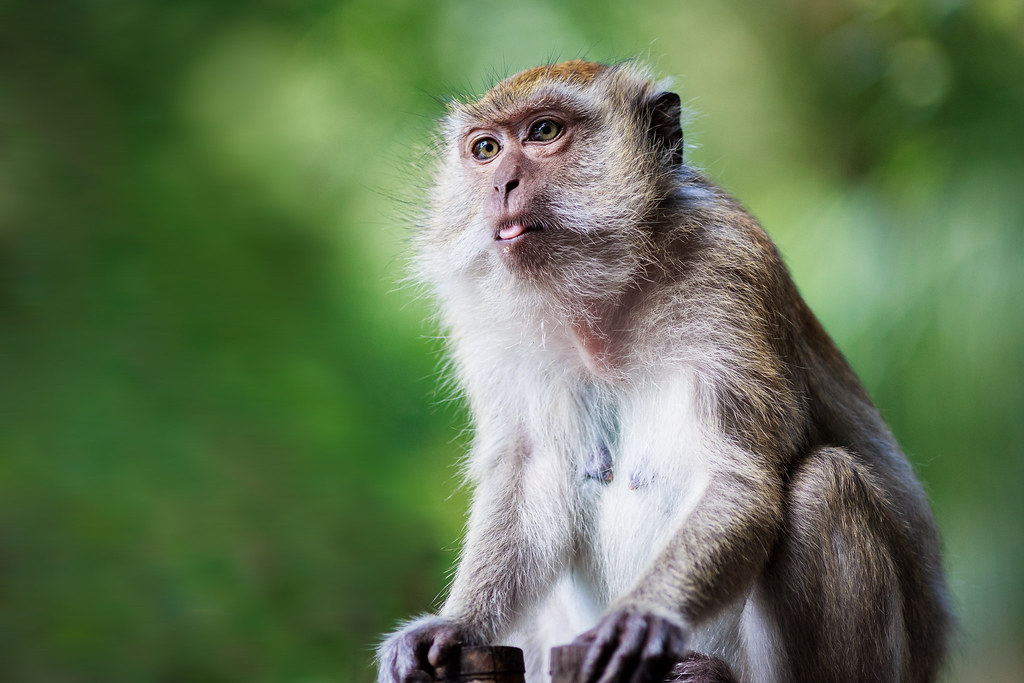
Banker monkey
Image from Tore Bustad


Reading Diary A: Indian Fables and Folklore

Notes on Indian Fables and Folklore by Devi

There is a little man in the eye

The hare convinced the elephant that the moon was out to get him

The elephant tried to crush the hare, but the hare sat on his back, causing the other elephants to think that the hare was pinning the elephant and the other elephants ran away

Elephant came into market place, and everyone closed.  Salesman said he was all out.  Elephant crushed stand and took food. 

Monkeys tried to rescue the moon from a well and all fell down into it.  Monkeys are stupid.

Sage raised rat; sun, clouds, wind, mountain tried to avoid marrying her.  Married to a rat.

Snake tricked frog king to let him eat his attendants and himself

Gautama murdered the crane and was executed.  Not even the worms would eat his body.

Ratnakar was a robber.  When he found out that his wife and children did not approve of his deeds, he repented and performed austerities.  He became known as Valmiki, the author of the Ramayana.

Parasols and shoes are gifts from the sun.

Atreya went to Heaven and was pleased.  He built a heaven on Earth.  When giants destroyed his heaven, he realized his folly.

Yudhishthir was allowed to bring his dog into heaven

Yudhishthir and the Pandavas recieved a magic food bowl in the forest that gave them what they needed to eat.

Hare fools Elephant with the Moon
Image from Wikipedia


Tuesday, November 3, 2015

Reading Diary B: Tales from the Epics

Notes on Kincaid.  Tales from the Epics.

Ruru and Pramadvara.
Ruru gave Pramadvara half of his life to make her return from the dead after she was bitten by a snake.


The Frog King's Daughter.
This story, once again, contains love at first sight.
The king Parikshit falls in love with a beautiful princess who happened to be a frog.
I don't understand why the princess requires the king to forbid her from looking at water on the ground.  Does water automatically make her turn back into a frog?  This makes even less sense when the frog king comes to Parikshit's court and says that his daughter deceived Parikshit and many other men.
Frog's sons were cursed to hate sages.
Vamadeva, whose horses were stolen, is a very forgiving sage, especially in comparison to the other sages we have heard stories about.


The Descent of the Ganges.
Queen Sumati gave birth to a gourd that contained 60,000 sons.
Prince Asamanja, the son of King Sagar, was banished from the kingdom and never heard from again.
In order to punish King Sagar for pride of his sons, Vishnu came, disguised as an old woman and stole the sacrificial horse from them.
The 60,000 sons set out to find the horse.  They dug through the earth to get to the other side and asked elephants which hold up the earth if they had seen the horse.  Finally, they found a meadow where the horse and the old woman were.
The old woman turned into a god and fire shot out of its eyes to consume the 60,000 sons.  This must have been a very impressive sight.

The Tale of the Pole Star.
Dhruv walks along a path to find Vishnu and becomes the pole star.

60,000 sons could fill OSU's Boone Pickens Stadium
(OU's stadium capacity is 82,000)
Image from Flickr

Monday, November 2, 2015

Reading Diary A: Tales from the Epics

Notes on Kincaid.  Tales from the Epics.

The tortoise who holds up the mountain on his back is referred to as the "Tortoise king;" there is no mention of Kurma, the avatar of Vishnu.

Vishnu gives the ambrosia to only the Devas because the demons tried to take it for themselves.  In other stories, the gods do not want to share the nectar with the demons.

The eclipse of the sun is caused by the Asura Rahu, who lost his head when he tried to drink the nectar.

Uttanka cursed the king for giving him unclean food.  Who curses someone to blindness because their food is cold and has a hair in it?  Is seems very outrageous to me that Uttanka, who just received the Queen's earrings for free, would curse the king.

The Indian year has 6 seasons

King Kashyapa's wife, Queen Kadru, wants to be mother of 1000 snakes.  When her sons refuse to do her bidding, she curses them to be consumed in a snake sacrifice.  What mother curses her own children?  It seems like the characters in these tales curse each other so freely.  What is particularly interesting to me is their ability to make some of these curses.  How can they just say that another person will be blind or not have any children and then it happens?

King Kashyapa's other wife, Vinata, has two sons.  The first curses her to slavery for breaking his egg, and the second son is a bird.  How does a naga have a bird for a son?

After Indra steals back the ambrosia, the snakes but their tongues on the sharp grass, which is why snakes now have split tongues.

In addition to curses, the characters of these Indian stories also seem to make strange promises.  Jaratkaru promises only to marry someone with his same name that will cost him nothing.  This requirement seems so arbitrary and unnecessary.

When Jarakaru finally gets a wife, he curses her for waking him up so he can say a prayer.  Once again, this seems very backwards.  His wife was only trying to help him and he punishes her for this.

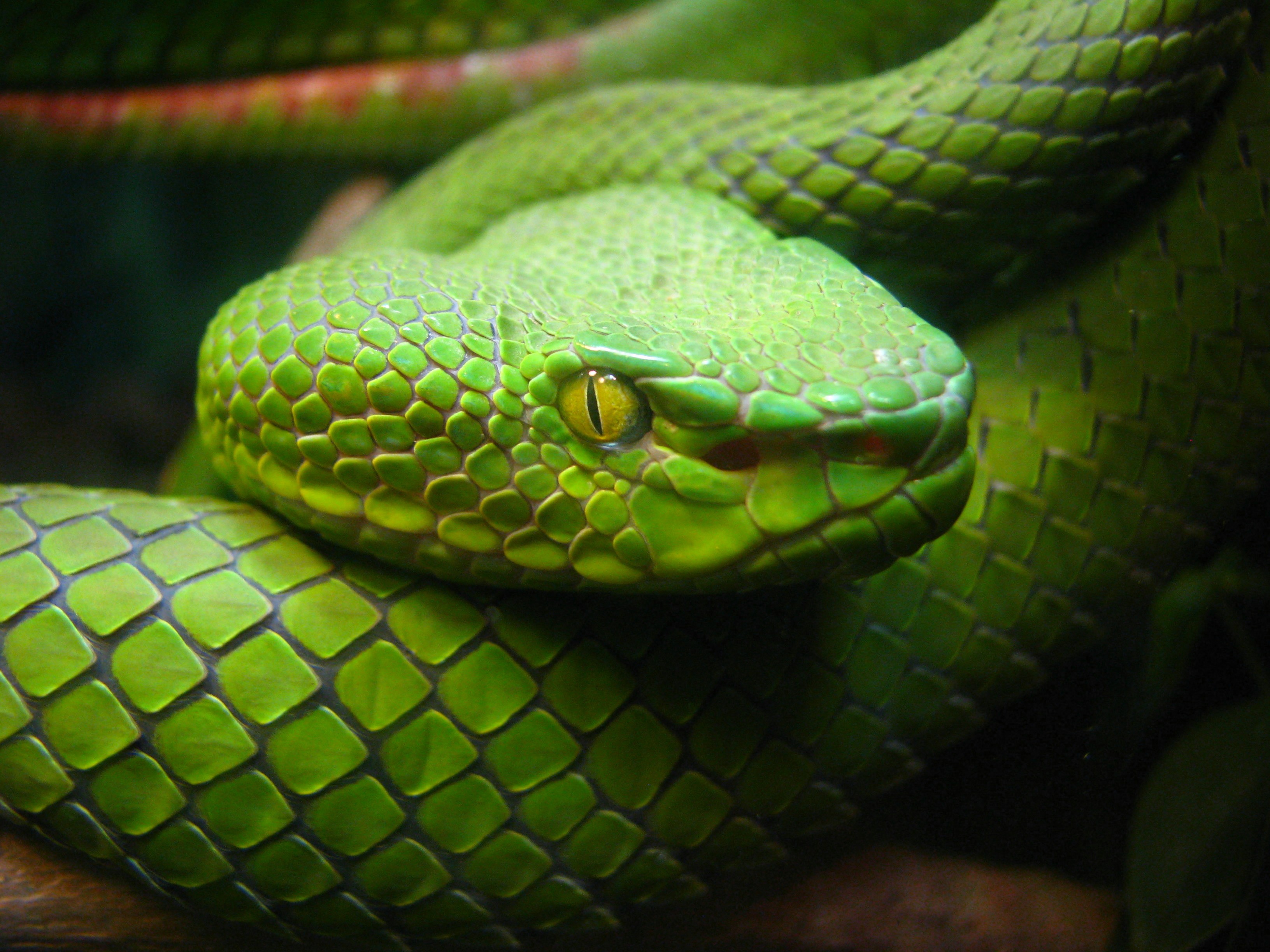
One of One Thousand Snakes
Image by Carolyn


Monday, October 26, 2015

Reading Diary B: Peter Brook's Mahabharata

Notes on Peter Brook's Mahabharata:

Yudhisthira goes to Bhishma for counsel and speaks to the deathless boy.

Drona's loyalty is questioned.

"He was born for a life of pease, yet he chose war" -Vyasa about Drona

Drona pours wine or blood on his head when he looses the will to live.  After he hears that Ashwatthama is dead.

Karna's death seems to be the most tragic point of the film up to this point.  After his chariot wheel drops into the earth and the sun goes behind the cloud, he seems completely lost as he tries to remember the words to attain the weapon which will save him.  The great warrior Karna was reduced to desperation and fear just before he died.  After Karna dies, the Pandavas learn that Karna is their brother.  They are distraught that they killed their brother.

After the battle, Duryodhana retreats to underneath the ice in the river.  He seems like a coward for hiding in the water, but he is offered the kingdom if he beats Bhima in a fight.  His greed gets him out of the water.  It seems strange that Duryodhana is originally able to best Bhima with clubs since Bhima is such an acclaimed warrior with the club.  Krishna advises Bhima to cheat by hitting Duryodhana in the leg, and Bhima is able to win the fight after he does so.

Krishna often advises what seem to be morally questionable choices.  He lets Bhima's son go to his death, he advises to Arjuna to shoot his enemies when they are down, and he advises Bhima to cheat. Apparently, Gandhari thinks so too; she curses Krishna for participating in the fight through his advice.

Just before Gandhari and Dhritarashtra are killed by a forest fire, Dhritarashtra orders Gandhari to take off her veil, but she does not.  Why does she lie about taking off her veil?

Karna's Death
Image from Peter Brook's Film

Saturday, October 24, 2015

Reading Diary A: Peter Brook's Mahabharata

This week, I am watching the second half of Peter Brook's Mahabharata.

Amba visits Bhishma in the night.  It now makes since how he could know Amba's new form.  In the previous version we read, it seemed strange that Bhishma knew that Shikhandi was Amba reincarnated.

What I don't understand is why Bhishma tells the Pandavas how to kill him.  If he wanted the Pandavas to win, then he did not have to fight for the other side, but it seems reckless to tell the enemy how to defeat you.

I'm still a little confused about Shikhandi(Amba).  Did he even shoot his arrow?  It seems like he was unable to kill Bhishma, and instead Arjuna fired the arrow.

I thought it was very interesting how Krishna guided Arjuna's arrow.  Krishna carried the arrow until it his Bhishma, which I suppose is how the filmmakers showed that Krishna influenced the flight of the arrow and made it fly true.

Arjuna shoots an arrow into the ground to produce water

I really like Karna's interaction with Kunti.  It is a very emotional scene.  You can see that Karna is deeply hurt that his mother abandoned him and that he longs for a mother.  My favorite quote from the interaction is, "After the battle you will keep the same number of sons."

It seems very cruel that Krishna, knowing that Karna possessed the celestial weapon, sent Bhima's son to die in order to destroy the weapon.  However, I suppose it was a very effective tactic.

Brook's film also give a lot more detail about the death of Arjuna's son.  Arjuna breaks through the enemy's defenses, but he does not know how to escape.

Arjuna's Son
Image from Film


Wednesday, October 7, 2015

Reading Diary B: Peter Brook's Mahabharata

The gambling match still baffles me.  I don't understand how Yudhisthira, one of the wisest men, could gamble everything away.  He had nothing to win and everything to lose.

The king Dhritarashtra is portrayed as a caring and normal man who is trying to do the best by his children.

Amba tries to get Bhima to kill Bhishma.

Arjuna's exile seems to be missing entirely from the film.  There is also no House of Fire.  Half the movie remains and the war is the only large event that remains.

The Kauravas try to kill the Pandavas in exile.  Vyasa interferes and puts a stop to the attack.

Bhima encounters Hidimba later chronologically.  He is married to Draupadi at this point.  Hidimbi looks overjoyed when her brother is killed.  It is somewhat disturbing that Hidimbi goes from being faithful to her brother to experiencing joy at his death only a few minutes later.  Kunti is not here for this fight.

The Kauravas use fire to invoke Arjuna.  They can see that he is searching for weapons and the Kauravas can even talk to him.  I wonder what type of god or magic makes this possible.

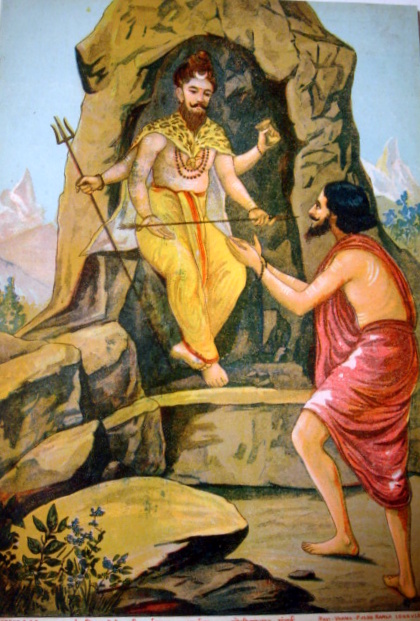
Arjuna gets a weapon from Shiva.

Karna cares for a Parashurama in the wilderness and asks for a weapon in return.  Parashurama gives Karna a formula that will call a creature from heaven to give him a weapon.  When Parashurama sleeps, a worm eats a hole in Karna's thigh.  Parashurama accuses Karna of lying to him about being a kshatriya and curses him to forget the formula.  Also, where did Karna's armor go?

The Riddles at the Lake makes a little more sense now.  The Pandavas are overcome by an overwhelming thirst that makes them drink even when their brothers are dead.

Arjuna gets the Pashupata from Shiva
Image from Wikipedia


Tuesday, October 6, 2015

Reading Diary A: Peter Brook's Mahabharata

Peter Brook's Mahabharata has several differences from the PDE Mahabharata.  Below I've listed the biggest differences that I noticed or things that stood out to me this time that I did not notice earlier.

I really like how they start with Vyasa as the story teller and constantly go back to him.

Vasu's sperm is given to a falcon; he doesn't ride a flying chariot.

The PDE Mahabharata focuses on Bhishma's "terrible oath" but the film sees his action more positively - "The gods applauded his actions."  He is portrayed as noble.

Amba goes back to Bhishma and threatens him after Bhishma refuses to marry her.

Pandu makes his brother king
I don't remember Kunti's mantra

I only remember 4 Pandavas instead of 5.  The PDE Mahabharata only discusses Arjuna, Bhima, and Yudhisthira in depth.

A ball of flesh comes out of Gandhari's womb.  This is a pretty memorable visual and explains how she can have so many children.

Ajuna's promise to fight Drona and fight to kill
Youth rejected because too many pupils

The film portrays Drona as cruel.  Ekalavya, the youth that cuts off his thumb for Drona is rejected because Drona already has enough pupils, not because he comes from a kingdom of robbers.

The film skips over a lot of material before the dice game.

Pandavas get bad land from Dhritarashtra and improve that land so that they have a wonderful palace and all the people are happy.

The Kauravas, especially Duryodhana are maddened by jealousy.  They seem to be noble when they accept Karna.  However, after this they are only trying to keep up with the Pandavas.

Yudhisthira loves gambling in the film.  In the PDE Mahabharata, he is just unable to refuse a challenge.

Swayamvara challenge was shown as the contest in Peter Brook's film
Image from Wikipedia

Monday, September 28, 2015

Reading Diary B: PDE Mahabharata

65. Death of Drona - At certain points in the battle, each side compromises their honor or moral code in some way to gain an advantage. This is the main case for the Pandavas. They don't strictly lie, but they kill Drona through deceit.  As Drona was almost like a father to the Pandavas, it is sad to see him go in such a manner.

66. Bhima and Duhshasana - This takes the cake for Bhima's most gruesome kill. He's pretty good at killing people in gruesome ways. He completes his vow by slaying and drinking the blood of Dihshasana.

72. The Pandavas and Bhishma - Bhishma's fable gives a lesson that many of the heroes in the Mahabharata need to understand. A seemly evil act might be justified in some circumstances. For instance, when Arjuna is banished for 12 years because he walks into the room where Yudhishthira sits next to Draupadi. It would make sense for him to not go into exile. Bhishma's moral also makes every decision much more theologically difficult. How is someone to know what is right or wrong?

80.  The Afterlife - Yudhishthira's journey to the nether regions reminds me of Dante's Inferno.  Yet, for him, it is only a test. The description of heaven raises a few questions about the afterlife.  When they attain heaven, is it their souls in new celestial bodies that dwell there?  Are the souls the same as they were for previous incarnations and do they remember all previous incarnations of themselves. For instance, Draupadi is there in heaven, but she was another in a previous life.  Krishna says (in a previous chapter) that everything that is has always been and will always be.  So does that mean that Draupadi has existed in many incarnations and is just now attaining heaven, where her soul will now dwell for eternity, now out of the pool of souls that make up life on Earth. That also raises a question about god's avatars. When they become incarnations on Earth, do they share the same soul as their celestial self?  When Krishna ascended to heaven, does he remain a separate entity from Vishnu, or does he rejoin with Vishnu to be one celestial being?

Yudhishthira's Journey to Hell

Reading Diary A: PDE Mahabharata

46. Bhima and Hanuman - Both Bhima and Hanuman are extremely physical and deadly in battle which makes sense because they both have the same father. The description of Bhima entertaining himself by killing lions, tigers, and elephant and then using their bodies to defeat other creatures makes Bhima seem incredibly cruel.  While I haven't counted, it seems like Bhima has the most kills. If not, he has some of the most gruesome kills.


48. Karna and Indra - This brings me back to when Karna and Arjuna first met. If only they could have humbled themselves and become allies, they would have rules the world. Now that Karna has lost his armor, he is surely doomed.

50. Riddles at the Lake - This reminds me of the Hobbit when Gollum and Bilbo Baggins exchange riddles. Considering the Pandava's wisdom and strength I'm surprised that they decided to drink after seeing their brethren dead before them.  Although it starts out poorly, Yudhishthira wins them the boon of going undetected in their last year of exile.

52. Bhima and Kichaka - This is probably Bhima's most gruesome slaughter. I can't imagine someone who is kneaded beyond recognition. I would not want to cross Bhima. 

60.  The Battle Begins - This is like a movie.  One of my favorite quotes is "Blood dropped like rain out of heaven."  Ghatotkacha, Arjuna's rakshasa son is very impressive.  He can grow to an enormous size.  I don't understand why Bhishma continues fighting even though he doesn't believe in the cause.

Ghatotkacha

Tuesday, September 22, 2015

Reading Diary B: PDE Mahabharata

21. House of Fire - I don't understand why Prince Vidura has a miner dig a tunnel out of the house.  Although it is an interesting way for them to escape, it seems unnecessary.  They weren't prisoners, they could have just left when they realized that the house was soaked in oil.  I also expected Vidura to be punished for the deaths of the innocent beggars, but instead, they just provided a means of escape for the Pandavas.

Vidura's Tunnel
Image from Wikipedia

23. Bhima and Hidimbi - That was fast.  Bhima barely knows Hidimbi when he decides to take her as his bride.  Bhima is very good at breaking backs.  He also breaks Jarasandha's back later in the story.

27. Wife of the Five Pandavas - It is strange to me that Draupadi is accidentally married to five men.  People in the Mahabharata take their words very seriously even when the outcome does not make sense.  For instance, when Arjuna walks in on Draupadi and Yudhishthira he stays true to his vow and goes into exile for 12 years.  Even though Yudhishthira did not want Arjuna to depart, he still leaves.  It seems like this attitude of taking the spoken word so seriously causes a lot of unnecessary trouble.

34. The Burning of the Forest - During the wedding of the Pandavas and Draupadi, the Pandavas are said to be an incarnations of Indra. It seems strange that Arjuna would fight Indra if he himself was an incarnation of Indra.

37. The Gambling Match - It is particularly sad to see Yudhishthira gamble all his possessions away.   Gambling is a dangerous endeavor.  Even today, many people are destroyed through their gambling addiction.  Since he lost every single match, I am surprised that Yudhishthira was not wise enough to know that the game was unfair.

Monday, September 21, 2015

Reading Diary A: PDE Mahabharata

4. Devavrata's Vow - What I don't understand is why Devavrata didn't marry Satyavati instead of vowing not to have children or take the throne.  It seems like it would have worked better for everyone if the two married.  That way, Devavrata would have still become king and the line would be continued.

5. Bishma at the Swayamvara - Bishma demonstrates his mighty power by capturing the three princesses.  His skill also makes me wonder why he took the vow; he could easily have been a powerful ruler.  It seems like Bishma tries to do right, but instead just makes more trouble for himself.  First vows not to be king, and now he captures the princesses.  Because of the trouble with Amba, Bishma will be slain by her.

Bishma abducts the three princesses


9. Pandu and His Wives - It seems like ancient kings really need to be more careful when they go hunting.  It is really a bummer for Pandu that he is doomed to die in the arms of one of his wives just for the small mistake that he made.  It seems that in many stories, the main troubles are caused by small mistakes.

18. The Arrival of Karna - It seems like Arjuna and Karna could have resolved their differences to their benefit if they had not been overly prideful and refused to back down.  I wonder how it would have changed their reactions if they knew that they were brothers.

19. Drona's Revenge -  I wonder if Drona will later regret taking out revenge on Drupada.  While Drona is happy with the settled score, it seems like Drupada wants to get revenge of his own.

Tuesday, September 15, 2015

Reading Diary B: Sita Sings the Blues

It seems like the entire first half of Sita Sings the Blues was devoted to setting up the second half.  Right after the intermission, Dave breaks up with Nina over email.  All he says is "Don't come back."  This harsh email is an enormous criticism of Rama and shows the the writers of the film think Rama is extremely cold and neglectful.

The Dhobi is mentioned a couple times in Sita Sings the Blues.  I don't remember him being mentioned in the PDE Ramayana.  A Dhobi is a washerman.  We hear that the Dhobi beats his wife and refuses to take her back after she has been with another man, saying that he is not like Rama.  Then Rama decides that he needs the respect of his subjects and banishes Sita.  Rama is portrayed as extremely cold, and he even walks on his pregnant wife at one point.

Rama Walking on Sita
From Sita Sings the Blues by Nina Paley


At 1:04 Sita has twins in the forest.  Which leaves me wondering: what are the sons of avatars?  Are they demigods, gods, or mortals?  As the twins sing their song about Rama, the writers take another kick at Rama by making the songs as hypocritical as possible.  They sing: "Sing his love.  Sing his praise.  Rama set his wife ablaze" then, "Duty first.  Sita last."

Next, we go back to Nina in New York.  She dials Dave and pleads with him to take her back.  I noticed that she dials 16 numbers to make her call.  However, a call to India should only be 15 numbers (011 - US exit code, 91 India country code, then 10 digits in the Indian phone number).

When Sita is swallowed up by the Earth, she is portrayed as vengeful.  At this point, I realized that her fingers are entirely red.  I'm not sure if this is supposed to be finger nail polish or something else, but to me, it looks like her fingers are covered in blood.  I also noticed that the film doesn't show Rama's departure from the Earth.

The last scene shows Nina reading the Ramayana, seemingly over her depression about Dave.  I did not realize that this story was from her own experience until I saw the note in the credits about her cat.  According to the introduction of a talk Nina gave, this story details the end of her marriage.

Monday, September 14, 2015

Reading Diary A: Sita Sings the Blues

Of all the differences between the PDE Ramayana and Sita Sings the Blues, I found what the animated film chose to leave out to be very intereesting.  For instance, Lakshama is not in the story except for a brief mention at the beginning.  Most of the sub-stories are left out.  We don't hear about Bharata, Vali and Sugriva, Vishvamitra, or even how Rama wins Sita.  Instead, the focus is on Rama's banishment, Sita's capture, Rama's rescue of Sita, and Rama's refusal of Sita.  The film is only half-finished, and it is already near the end of the story.

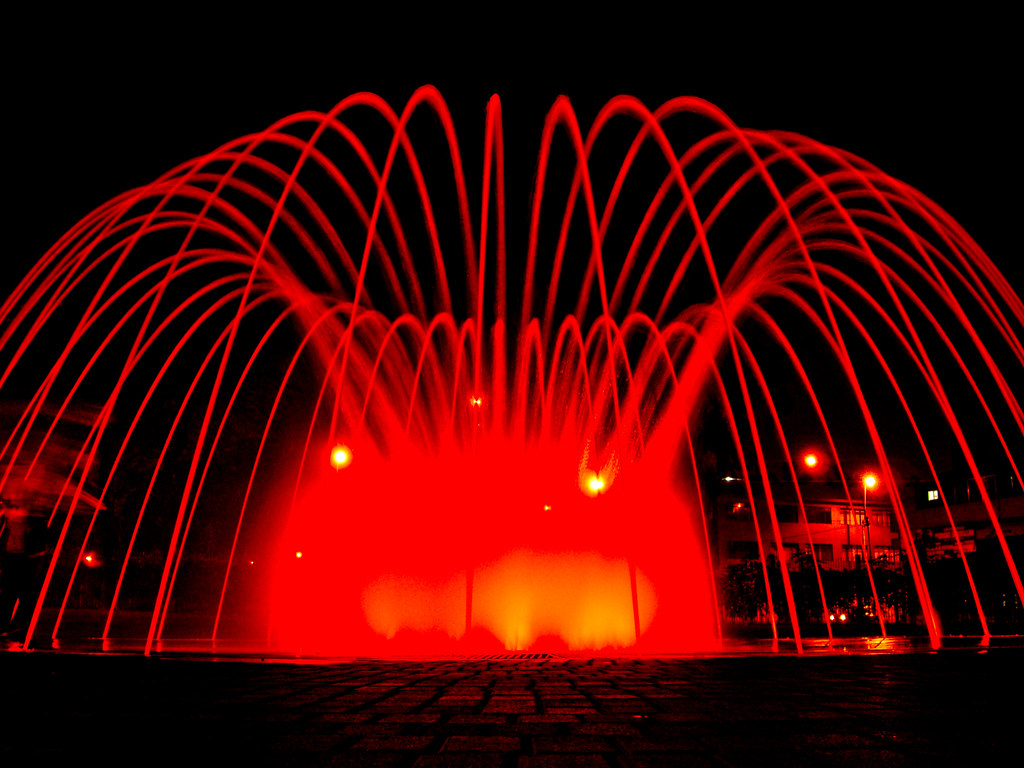
You would expect that, as an animated film, there would not be very much violence.  However, the film seems to satirize the violence with a near celebration of violence.  Rama and Sita are seen under the fountain arch of rakshasa blood.  During fight scenes, heads comically pop off and blood gushes everywhere.

Fountain of (Rakshasa) Blood
Image from Kristian Golding


I like how the film is broken into commentary, singing, story, and the modern-day story.  I think it breaks up each section well and keeps the entire story interesting.  The gives a different perspective on the story.  The comment that most stuck out to me was the question why Sita didn't leave with Hanuman.  It seems logical that Sita would accept rescue when she had a chance.  They also portrayed Ravana to be originally good but was slowly corrupted, while the PDE Ramayana only mentioned negative qualities of Ravana.

The side story of Nina and Dave is also an interesting addition to the story.  I assume their relationship will parallel Rama and Sita's relationship in some way, but I don't know where they are going with the story yet.  So far, it all seems like setup for some larger event.  Dave flew to India for a 6-month contract, leaving Nina behind.  When his contract is extended, Nina joins him in India for the next year.  We can already see some strain in their relationship, and Dave seems somewhat clueless to Nina's emotions.


Monday, September 7, 2015

Reading Diary B: Public Domain Ramayana

65. Hanuman and the Mountain - I thought it was a powerful image to see Hanuman carry an entire mountain back.  Just as when he destroyed the grove of trees where Sita was, Hanuman lacks patience in this instance.  However, he makes up for this with pure might.

Hanuman carrying the mountain
Image from Images Blog


71. Ravana's Death - Ravana was finally destroyed by a Brahma weapon.  This got me thinking a lot about the weapons in the Ramayana.  These empyreal weapons are known as astra.  Indrajit uses a naga-weapon against Rama's army, and he receives a Brahma weapon from the Fire-god, Agni.  When Hanuman was captured, it was only accomplished with a Brahma weapon.   According to Wikipedia, there are three different types of Brahma weapons, the particular weapon that is used in the Ramayana is the Brahmastra.  The Brahmastra is used to completely annihilate an enemy.  It can only be defended against with another Brahma weapon, it never misses, and it is equated with a nuclear weapon.  This leaves me wondering:  How did Hanuman survive a Brahmastra, and why did it bind him instead of slaying him?  Also, why did Rama wait for so long to use the Brahmastra instead of finishing the battle quickly with it?

Modern Day Brahmastra
Image from Wikipedia


73. Sita and Rama - "What man of high degree receives back a wife who hath lived long in another's house?"  What?  It's your fault that she was abducted Rama.

78. Valmiki's Hermitage - Rama does it again.  Sita has already endured the fire to prove her purity.  I don't understand why he must cast her away again.  Sugriva, for whom Rama killed Vali, was banished on more rightful grounds than Sita.  Could he not order a statue of Sita surviving the flames to be cast so that everyone would remember?  If he really loved her, then why did he have to send her away where she raised his children alone?  Maybe my modern-day western perspective clouds my vision.

Reading Diary A: Public Domain Ramayana

42. Sugriva's Story - Sugriva's story about how he came into conflict with his brother Vali is particularly tragic.  For a year, Sugriva stands watch over the hole where Vali descended to fight an enemy.  When Sugriva sees blood issue from the cave, he believes his brother is dead and covers the mouth of the hole with a mountain before he leaves to rule the kingdom.  When Vali finally escapes from the hole, he banishes Sugriva for abandoning him.  While Rama takes Sugriva's side, to me, this seems like both Sugriva and Vali are at fault.  Sugriva broke his vow to guard the hole and did not seek to avenge his brother.  Vali refused to forgive his brother and made the situation worse by banishing him.

49. Sampati and Jatayu - Both Sampati and Jatayu are extremely helpful to Rama.  Sampati tells that Sita was taken to Lanka.  He also tells the story about how he lost his wings.  Jatayu fainted when the two were racing and Sampati's wings were burnt off when he tried to protect his brother from the sun.

50. Hanuman's Leap - Impressively, Hanuman leaps 100 leagues over to Lanka.  He even tears through a rakshasi on the way.  This story was interesting because of Hanuman's feat and the water monster.  When I Googled, "water rakshasa," all that I found was information on a game called Summoners War.  Upon further research, Hanuman jumped through Surasa, a naga or serpent.  Surasa is the daughter of Daksha who is the son of Brahma, god of creation.

Hanuman's Leap
Image from Wikipedia


57. The Burning of Lanka - Hanuman is not a good spy, but he is a good saboteur.  He is captured when he destroys the Ashoka grove.  Now, not only does he escape, but he burns half of Lanka to the ground in the process.  Just a few years ago, a new species of monkey, called the fire-tailed tiki monkey, was discovered.  I wonder if they are related to Hanuman.

Tuesday, September 1, 2015

Reading Diary B: Public Domain Ramayana

24. The Sandals - Not only is Rama a hero, but so are his brothers.  Bharata is humble enough to refuse the throne.  Instead, he rules from a location of exile and has his brother's shoes as the symbol of rule.  It is interesting that Rama's shoes are the symbol of authority.  It seems like he could have sent one of his many surplus weapons.


30. Battle with Khara - I really like the imagery when Khara's army is described as "black tremendous clouds rushing towards the rising sun."  His arrows "swept among the rakshasas like fire in a sun-dried forest."  This scene (along with much of the rest of the story) reminds me of a Tolkienesque fantasy.  I just image swarming armies of orcs closing in on a few hobbits and a wizard.  This seems to be Rama's most insurmountable challenge yet.  Yet he alone is able to defeat an army of thousands.

Rama defeats Khara


35. Ravana and Sita - The loss of Sita reveals weakness in Rama.  Until this point, Rama has been nearly without mistake and invincible.  But despite the warning from his brother about the deception of rakshasas, Rama chases after the golden deer and leaves Sita.  It shows that the only way to overcome Rama is through cleverness and wit; he is unbeatable through sheer force.  However, I expect that Ravana won't get away with his deed for long.


36. Jatayu - Jatayu seems like a very interesting character.  I'd like to know more about this bird that watches over the forest.

Monday, August 31, 2015

Reading Diary A: Public Domain Ramayana

5. Thataka - Rama does really well for his first battle.  He slays Thataka and gets magical weapons.

Rama and Lakshmana battle the rakshasas


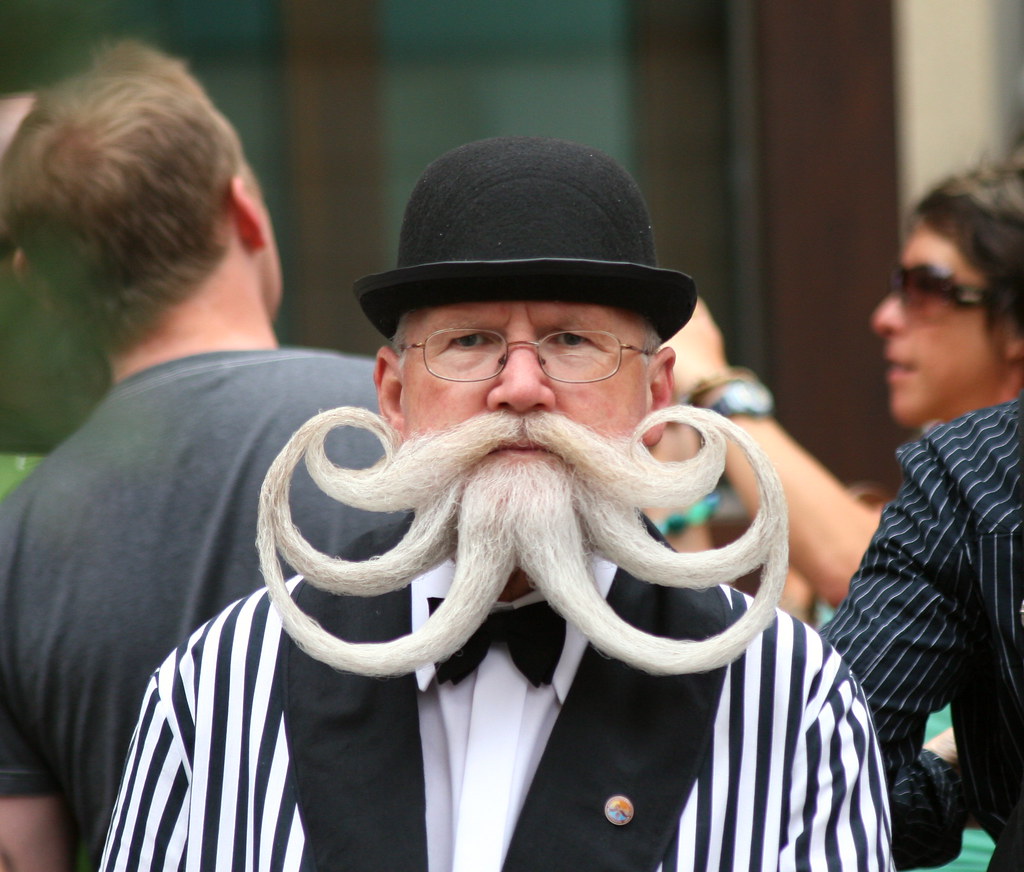
6. Bhagiratha and Ganga - I do love a good geneaology.  Boy does Sagara have an interesting family tree.  Somehow one of his wives has 60,000 sons!  If someone had twins every 9 months, it would take 22,485 years to have all 60,000 kids.  Of course, Sagara reigned for 30,000 years so there is plenty of time to spare.  If the oldest son could grow 6 inches of beard hair every year, he could have a beard 3.4 kilometers long by the time the youngest was born!  It sounds like Feodor Vassilyev is going to be put out of business.  When the 60,000 sons get burnt to ashes along with all their beards, it takes five generations (and 62,000+ years) to bring down the River Ganga to send them off to heaven.  Bhagiratha son of Dilipa son of Anshuman son of Asamanja son of Sagara finally does the trick.


Imagine a 3.4km beard
Image from Aaron Morton


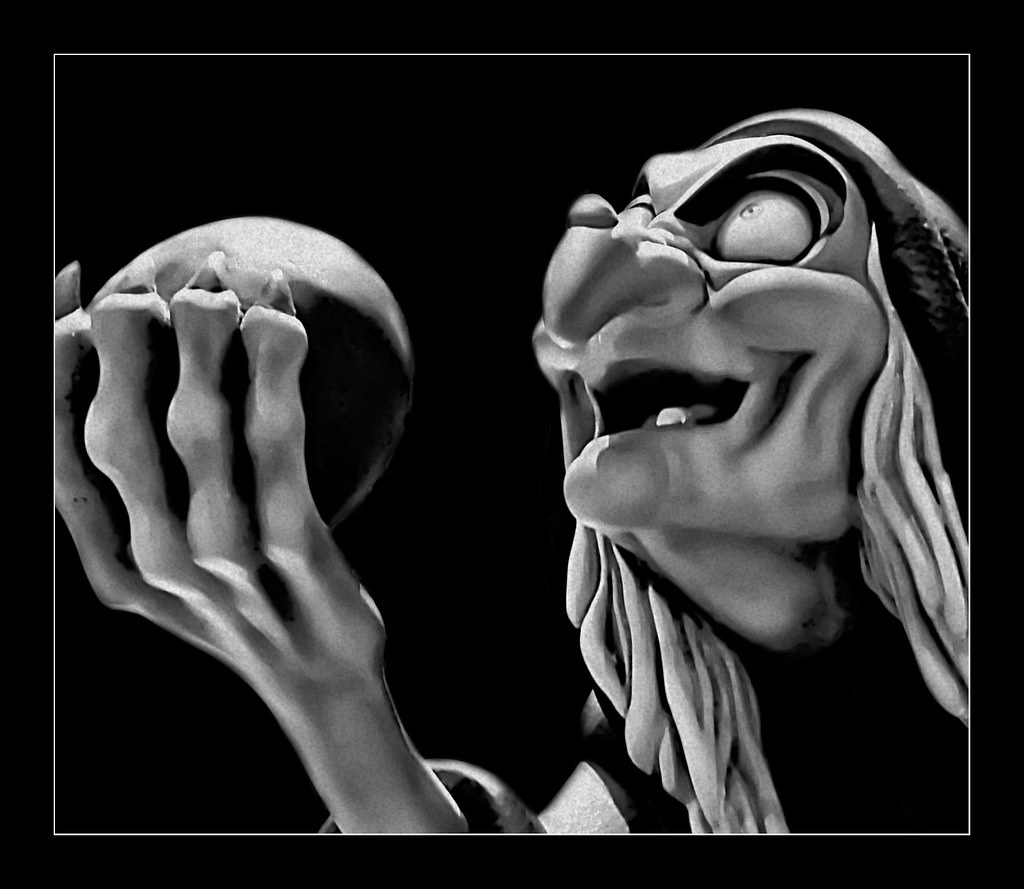
14. Manthara and Kaikeyi - Here is where things turn sour.  Up to this point, Rama has smashed in the heads of rakshasas and won the hand of the fair Sita.  Just when he is about to rule the kingdom, Manthara messes things up.  Manthara is described as an ugly hunchbacked woman.  I tend to picture her as the wicked witch from Snow White, except without an apple.

Witch from Snow White
Image from Joe Penniston


19. Dasharatha's Karma - Dasharatha is having a really bad time.  He lost his son, and now we are told a story from his youth when he accidentally kills a young boy.  In Orange is the New Black, Yoga Jones does something similar.  She shoots what she thinks is a deer eating her marijuana plants but is actually a little kid.  Jones ends up in prison and Dasharatha looses his son and dies in sorrow.  If only they had both taken a gun safety class.