Showing posts with label Storytelling. Show all posts

Thursday, November 12, 2015

Week 12 Storytelling: The Mouse and the Elephant

Elephant by the Water
Image from Wikipedia


Maximilian sat by the lake, grooming his whiskers in the reflection of the pristine waters.  The sun had just set and it was quiet for the watering hole.  Usually all sorts of animals came for a drink.  The lake was arguably Maximilian's favorite place, especially when it was quiet.  However, when there were others about, he had the pleasure of animal watching.  It appeared that he would have both tonight; there was a herd of elephants approaching from the distance.

When the elephants arrived, they nosily slurped up the water until they had their fill.  One by one, as they finished drinking, they meandered off to a patch of grass where they gossiped and ate the vegetation.  Finally, there was just one elephant left drinking water.

On the other side of the lake were a group of hares that had shown up around the same time as the elephants had.  Maximilian could see that they were growing increasingly perturbed by the elephants.  With such large ears, the elephants' ruckus was particularly disturbing for the rabbits.  Finally, one of the hares decided to get rid of the elephants.  He hopped over to the lone elephant.

"Listen to me oh Elephant, I am the hare in the moon, and I have come to warn you against disturbing the moon.  Leave here at once!"

Since the moon was behind the clouds, the elephant did not pay much attention to the hare.

"The moon's wrath will destroy you!"

The hare dipped his toe into the water as the moon appeared from behind the clouds.  The elephant looked up and saw the moon reflecting up at him.  Suddenly, because of the waves caused by the hare, there were multiple reflections of the moon in the water.  When he saw the moon split into multiple pieces to attack him, the elephant rumbled backwards and retreated as fast as he could.

Maximilian felt sorry for the poor elephant and he went over to comfort him and invite the beast to a luncheon he was planning for tomorrow.  When he reached the elephant his fur shimmered in the moonlight.  The elephant thought that Maximilian was a piece of the moon that had come to attack him.  But when he saw how little the shimmering mouse was, he decided that he could easily squash the tiny piece of moon.

Just before Maximilian was about to speak and invite the elephant to his party, the giant beast tried to squash him.  Goodness! thought Maximilian.  He scrambled behind the elephant and leapt up on his back.  The other elephants, saw the tiny mouse and thought that he was holding the great elephant to the ground by some magical force.  With this realization, they became afraid and stampeded off as fast as they could go.  Even today, elephants are still afraid of mice.

Author's Note: This story is a combination of The Hare in the Moon and The Elephant-Fighting Hare, both from Devi's Fables and Folklore.  The first part of the story, when the hare uses the moon to scare off the elephant, is very similar to the original Hare in the Moon story.  However, for the second part of the story, I wanted to explain why elephants are afraid of mice.  Instead of a hare that sits atop the elephant, as in The Elephant-Fighting Hare, I had the mouse sit on the elephant's back.

Bibliography:
"The Hare in the Moon" by Shovona Devi, from Fables and Folklore (1919). Web source: Indian Epics Reading Guides.

"The Elephant-Fighting Hare" by Shovona Devi, from Fables and Folklore (1919). Web source: Indian Epics Reading Guides.

Wednesday, November 4, 2015

Week 11 Storytelling: The Human King's Daughter

There was once a great king named Parikshit who ruled over the entirety of Lake Ayodhya.  He was outside for his afternoon hop when he saw the largest and most juicy fly that he had ever seen.  The chase begun.  For nearly three days, the great king chased his prey.  The fly landed, the king was in reach, and he was just about to snap up the fly.  Suddenly, another tongue grabbed the fly, and it was gone.  Parikshit's heart filled with rage.  Who dared interfere with his hunt?  He turned to face his enemy so that he might banish him from the kingdom.  But when he saw who had taken his fly, his heart stopped.  It was the most beautiful frog he had ever seen.  She had the most beautiful yellow eyes, her spots were perfectly round, and the way she caught flies with her tongue was exquisitely graceful.  He knew instantly that this frog must become his queen.  He approached her to ask for her tongue in marriage.

"Lovely lady, you are the most beautiful frog I have ever seen.  Marry me and be my queen."

"I will become your wife, but you must make me a promise."

"Anything you ask my dear."

"Never let me gaze upon pavement."

King Parikshit thought this was a strange request, but he readily agreed.  The next day they were married on a lilypad in Lake Ayodhya.  The couple lived very happily.  Every morning, they went on a hop around the lake. One morning, they stumbled upon a sidewalk.  Although the king had heard about concrete, he had never seen any for himself.

"Darling, come here and see this marvelous sidewalk."

His wife joined him on the sidewalk.  The king began to examine the pavement with great interest.  But when he turned around, his queen was gone.  Walking towards him was a human.  King Parikshit dashed off with a heavy heart.  He later realized that the human must have killed his bride.  He resolved to strike back.  Before any frog could have an audience with the king they were required to bring him possession of a human.  The King knew how much humans liked their possessions, and soon King Parikshit's castle was surrounded by watches, baby toys, and dollar bills.

After about a month the human king Ayusha decided that he had enough.  He disguised himself as a frog and sought an audience with the king.

"Oh great king, I am Ayusha, king of men.  My people have suffered enough.  Stop taking our goods, and let us have peace."

"A human killed my queen, and I must have retribution for her life."

"Your queen is still alive.  She is my daughter Sushavana.  She disguised herself as a frog when you met her.  She has deceived many frogs this way, and does not deserve to be queen."

King Parikshit was saddened that queen had left him, but he decided to forgive her if she came back.  Sushavana then reassumed her form as a frog and returned to Parikshit.  The couple lived the rest of their lives in peace and happiness by Lake Ayodhya.

The Frog Queen
Image from Wikipedia


Author's note: I really enjoyed the story about the Frog King's Daughter.  In the story, King Parikshit sees a beautiful woman and decides to marry her.  When the two go swimming, the Queen turns back into a frog.  Thinking that the frog's are responsible for his queen's death, he requires his citizens to slaughter all the frogs that they could find.  Eventually, the king finds out that his wife was a frog in the form of a woman.  He takes her back and they have three children together.  I decided to retell this story from the opposite perspective by making the main characters frogs instead of humans.

Bibliography: Kincaid.  Tales from the Epics.  Frog King's Daughter.

Thursday, October 29, 2015

Week 10 Storytelling: Drona's Death

Drona looked at the display on his visor where he checked on the status of the battle, his own vitals, and the status of his son Ashwatthama. Everything was going well so far. Above him, two starfighters fought for air supremacy. With a blast of a laser cannon, the enemy's craft disintegrated into a million pieces.

The Kauravas and Pandavas fought for control of Hellas Planitia, the largest visible crater on Mars. The battle had raged on for nearly two weeks now. Drona was sad to see the cousins fighting in this way. He had mentored both groups of men when they were just padawans. His loyalty, however, remained with the Kauravas. As long as Duryodhana still wished to fight, so would Drona.

Drona's skill as a commander was unmatched. They had enormous success today; they had victories on every front, and the Pandavas were unable to claim any successes with Drona at the helm of the opposition.

Yudhishthira, the wise leader of the Pandavas, realized their predicament and devised a plan. He happened to know that the Kauravas spacesuits were manufactured by Lenovo, and they had one major flaw. The spacesuits that the military used ran the same operating system as civilian suits. When Lenovo manufactured the suits, they added a piece of software called Superfish to the bundle. The intent of Superfish was to allow subliminal advertisements to be shown on the suit's visor display. Superfish used a man-in-the-middle attack to insert these advertisements. It allowed encrypted traffic to be routed through an intermediary server which unencrypted the message, inserted the ads, re-encrypted the message and sent it to the spacesuit. Yudhishthira exploited this flaw. He intercepted messages sent to Drona that contained Ashwatthama's telemetry and made it appear as if Ashwatthama was dead.

Everything had gone well for Drona until now. He was on his way back from the midst of the battle to the command post in order to check how everything fared there. He glanced up at his visor again and saw that his son was dead. His heart nearly stopped, and he sank to his knees. Ashwatthama was his legacy and everything he lived for. Without his son, he could not continue the fight. A tear rolled down his right eye, and his spacesuit tried to compensate for the extra moisture. Had he walked another five hundred feet into the command post, he would have known that his son was still alive. Nearby, a starship landed and Dhrishtadyuma stepped out. He unholstered his weapon, aimed down sights, and fired a laser into Drona's heart.


Hellas Planitia
Image from Wikipedia


Author's Note: When I thought about Drona's death, it reminded me of the book "The Martian." The crew of the Mars mission believed that Mark Watney was dead and so they left him on the planet. Similarly, Drona believed that his son was dead and lost the will to live. I thought that Mars would make a good setting to retell this story, and as it involved a space battle, I threw in some Star Wars. The Superfish attack is a real venerability of some Lenovo computers. In order to make a few bucks on advertising, Superfish created a huge security issue for thousands of computers.

Bibliography: "Mahabharata" by Peter Brooks. Website: YouTube

Thursday, October 8, 2015

Week 7 Storytelling: Watto Loses Everything

Watto was from the planet Toydaria, and despite a difficult youth, he had managed to do well for himself.  Oringally, Watto had served as a soldier for the Ossiki Confederacy Army on his home planet.  After he returned home from war he expected to continue his father's business.  His father owned multiple businesses across the system, but the largest was a food producer known as Monsanta.  Monsanta farmed algae and fish for the Toydarians and had a near monopoly on the planet's food supply.  Instead, when Watto returned home, he discovered that his brother Datto was running the empire.  His father informed him that Watto would be given a small junk shop on the planet Tatooine.  Watto should have suspected as much.  His father had always favored his older brother.  He packed his things and took the next ship to Tatooine.

Watto would not let his father or brother stop him from acquiring fame and fortune.  He set about becoming the best junk dealer in the galaxy.  He began learning about trade from the local Jawas.  Before long, his junk shop was the most profitable on Tatooine.  Around this time he decided to join the slave trade.  He had an uncanny ability to choose the best slaves.  He even found a young boy by the name of Anakin who had a mechanical aptitude and boosted the productivity of his shop by nearly double.  Watto became very wealthy and very happy.  The business almost ran itself with Anakin there.

While everything was going well for Watto, Monsanta was going through a rough patch.  Datto was not nearly as competent as Watto.  In order to make himself feel better, Datto planned a trip to visit his brother.  Datto owned an empire while his brother had a measly junk shop.  However, to his surprise, when Datto arrived on Tatooine, he discovered that Watto was the wealthiest creature on the planet.  Datto grew jealous and hatred burned in his heart.  He decided that he would send his servant Shakuni to win everything from Watto in a gambling match.

If Watto had one weakness, it was gambling.  He loved to wager on the podraces.  Just before the biggest podrace of the year, two groups of foreigners came to Tatooine.  The first was Shakuni and his aides.  The second was Jedi Knight Qui-Gon Jinn, Padme Amidala, and a strange Gungan named Jar Jar Binks. Qui-Gon Jinn claimed to have a podracer that he won in a game of chance.  He wanted Anakin to pilot it for him.  If Anakin won, Watto would keep the prize money.  If Anakin lost, Watto would keep Qui-Gon's ship.  It was too good to turn down.  Similarly, Shakuni offered him a deal that was too good to be true.  Watto bet Shakuni that the Dug Sebulba would win the race.

If Sebulba won, Watto would have been the wealthiest man in the system.  But instead Anakin won the race, and Watto lost everything.  Watto spent the rest of his days destitute and alone.


Watto
Original Image


Author's Note:  I watched Star Wars Episode I last night.  Like Yudhisthira, Watto's weakness is gambling.  While Watto is extremely different from Yudhisthira, I thought he would make a good character to retell Yudhisthira's story.

Bibliography:
"Mahabharata" by Peter Brook. Website: YouTube.

Wednesday, September 30, 2015

Week 6 Storytelling: Bhima Slays Kichaka

For the final year of their exile, the Pandavas and Draupadi disguised themselves and lived in the courts of King Virata.  Although Draupadi had assumed the guise of a maid known as Sairandhri, she could not hide her radiant beauty.  When Prince Kichaka, the brother of the Queen, first beheld her, he immediately fell in love.  Kichaka decided to win Sairandhri's heart, so he convinced his sister, the Queen, to assign Sairandhri to bring him his afternoon meal.  Every day for an entire fortnight, when Sairandhri brought the food, the prince asked her to be his bride.  And each day she said nothing.

Finally, Kichaka grew impatient.  If the fair maiden would not give him what he wanted, then he would take it by force.  The next day, when Sairandhri was delivering food, Kichaka grabbed her by the arm and began to tear at her clothes.  She punched him in the nose and ran from his chambers as fast as she could.  Immediately, she went to her husband Bhima and told him everything that had taken place.

"Avenge me Bhima!  Do not sit idly while Kichaka tries to violate my honor."

"Have no fear.  Tomorrow will be his last day on this earth."

The next afternoon, Sairandhri brought the Prince his food.  But instead of taking it to him, she left the tray by his door and knocked.  When Kichaka opened the door, he found his tray of food.  Underneath the cup of wine was a brief note that reeked of perfume.  "Meet me in the dancing hall."

Kichaka wasted no time on his way to the dancing hall.  He hoped that Sairandhri had finally come to her senses.  The room was dark when he arrived, but he entered without hesitation.  Bhima, who was hiding in the corner, leapt out and threw Kichaka to the ground.  Bhima grabbed Kichaka by the hair and the feet and wrapped him around his knee.  Kichaka's back crackled as it broke in every imaginable place.  Then, Bhima kneaded Kichaka's body until every feature was beyond recognition.  It was unclear whether the heap of meat was an animal or a man.  Calmly, Bhima placed the body into a sack and carried him to the kitchen.

That evening, the entire royal household feasted on steak.  King Virata praised the meal as "our chef's finest work."  Even Queen Sudeshna, who normally avoided eating meat, gobbled up her entire portion.  Because of the delicious dinner, no one save Bhima and Sairandhri noticed that Prince Kichaka was missing.  Out of all the royal party, Bhima enjoyed his meat the most.  He thought about his vow to slay Dushasana and drink his blood.  Bhima looked into his cup.  Its contents were red as wine but slightly thicker.  He took a long draught from his chalice and smiled.


Bhima kills Prince Kichaka
Image from Wikipedia


Author's Note:  Of all the Pandavas, Bhima seems to kill his enemies in the most brutal ways.  I wanted to tie his murder of Prince Kichaka with his vow to slay Dushasana and drink his blood.  Most of the story follows the original, but I added the last paragraph, where Bhima and the royals eat Prince Kichaka, to emphasize Bhima's brutality.

Bibliography:
"Bhima and Kichaka" by C.A. Kincaid from The Indian Heroes (1921). Web Source: PDE Mahabharata.

Wednesday, September 23, 2015

Week 5 Storytelling: Palace of Fire

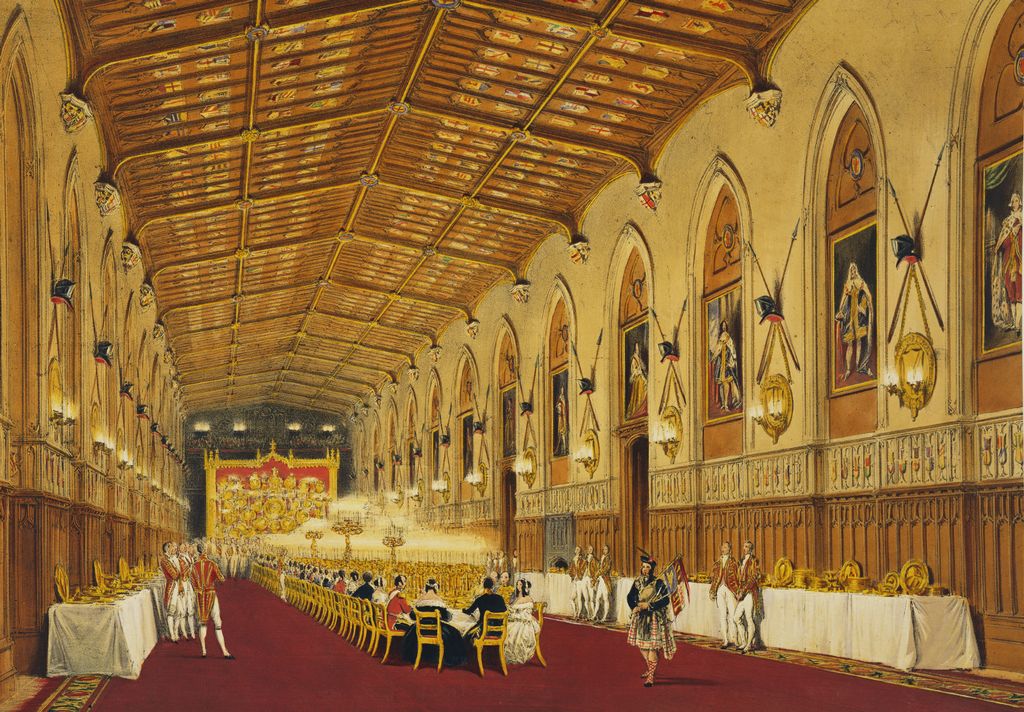
The Pandavas and their mother, Queen Kunti rode to the top of the hill, where an enormous palace stood, its magnificence matched nowhere else on Earth. It was a malevolent masterpiece of Prince Duryodhana, but the Pandavas did not yet realize the Prince's cruel intent.  They entered the Great Hall.  Above them was a vaulted wooden ceiling.  Emblems of all the great families lined the ceiling, and statues of fierce warriors watched over the vast space.  Despite their royalty and wealth, the Pandavas had never gazed upon any palace as grand.  They looked forward to spending the next few months in the place.

The Great Hall (in a strange gothic style)
Image from Wikipedia


Now Yudhishthira had received a warning from Prince Vidura about Duryodhana's treachery.  He soon realized that the entire palace was built with wood and soaked in oil.  His rage was immediately inflamed and he desired to leave the castle at once and kill Purochana, the guard Duryodhana had sent along with them.  Yudhishthira realized that Purochana had been sent to set the palace ablaze.  However, he realized that killing Purochana would seem unjustified and anger his people.  Instead, as he calmed down, he concocted a different plan to enact his revenge.  He counseled with his mother and the rest of his brothers, and they set to work at once.

The next day they announced their plans to hold a grand banquet to celebrate the completion of the palace.  As a reward for overseeing its completion, the Pandavas invited Purochana and all the other guards to attend this feast.  Yudhishthira went into the city hire additional kitchen staff and make the necessary arrangements.  Unbeknownst to Purochana, he also found a miner to help him complete a special project.  For the next fortnight, the Pandavas kept Purochana under a keen eye to make sure he did not set the palace on fire.

Finally, the day of the feast arrived.  The tables were decorated to their finest and there was enough food to feed an entire army.  Near the end of the meal, Yudhishthira accidentally knocked over a candle while raising his glass.  The table immediately burst into flame.  At the same time, all around the palace, servants set fire to the building and left with great haste.  The Great Hall stirred with commotion as the guards rushed to leave.  In their hurry, none of them realized that the royal family had disappeared.  The entire palace was engulfed in flames and the guards had no means of escape.  They all perished.

The next morning, the townspeople saw the heap of ashes and began to mourn the loss of the royalty.  At that time, the Pandavas arose from the underground shelter which the miner had built.  When the people saw the Pandavas arise from the ashes they shouted, "Masters of the Flames!"  Thus the Pandavas had their revenge and their glory was doubled throughout their kingdom.

Author's Note:  This story was particularly difficult to write.  I enjoyed the story about the "House of Fire" especially because of the tunnel.  However, building a tunnel seemed somewhat pointless since the Pandavas could have just walked out of the house.  I wanted to retell the story where the Pandavas are in the house when it catches fire so an underground passage is needed.

Bibliography:
"The House of Fire" by C.A, Kincaid, from The Indian Heroes (1921).  Web Source: PDE Mahabharata.

Tuesday, September 15, 2015

Week 4 Storytelling: Hanuman Saves Sita

Hanuman would have made an excellent repo man.  He possessed superhuman strength, was a master of stealth, and he regularly parachuted from airplanes just for fun.  Unfortunately, his only job was working for Rama, an abusive husband and boss.    Rama was the King of Ayodhya, and it certainly went to his head.  When Rama was making the rounds with his various girlfriends, he left his wife Sita at home.  Sita was a faithful and loving wife.  She cared for their home, managed the day-to-day affairs of Ayodhya, and was passionately devoted to her husband despite his extracurricular activities.

Tap. Tap. Tap.  It was a knock on the door.  She was puzzled.  Who would be at their door at such a late hour?  Thinking that Rama must have forgotten his keys, Sita walked from the living room to the foyer.  She glanced over at the clock.  It was just past midnight, but she hadn't heard the chimes.  She flipped on the outside lights, turned the lock, and opened the door.  No one.  Only the sweet song of crickets.  She peered across the street to see if the neighborhood boys had been playing pranks again.  A black dog scampered down the pavement.  Sita sighed.  She closed the door and turned around to head to sleep.  A man with ten heads stood in front of her.  Every face smiled in unison.


Black.

Rama stumbled home at 11 the next morning.  At 1 in the afternoon, he finally noticed that Sita was missing.  He summoned Hanuman.  "Find Sita for me, she seems to be missing."  Hanuman searched all of Ayodhya.  Sita was nowhere to be found.  He then checked the security cameras, and the verdict was unmistakable - Ravana had kidnapped Sita.  It was difficult to mistake a man with ten heads.  He sent a messenger to notify Rama and wasted no time going to the airport.  Within twenty minutes they were airborne and en route to Lanka.

Meanwhile, Ravana was busy trying to woo Sita.  She was held captive in the world's most beautiful garden, and Ravana brought her lavish gifts.  Sita could not remember the last time Rama had given her a gift or even written her a letter.  Yet she lay facedown on the ground, weeping for Rama.  Ravana tried in vain for the next hour to convince her to become his wife.  Frustrated, he gave her an ultimatum, "you have two months to join my bed, otherwise your head will be on a spike."

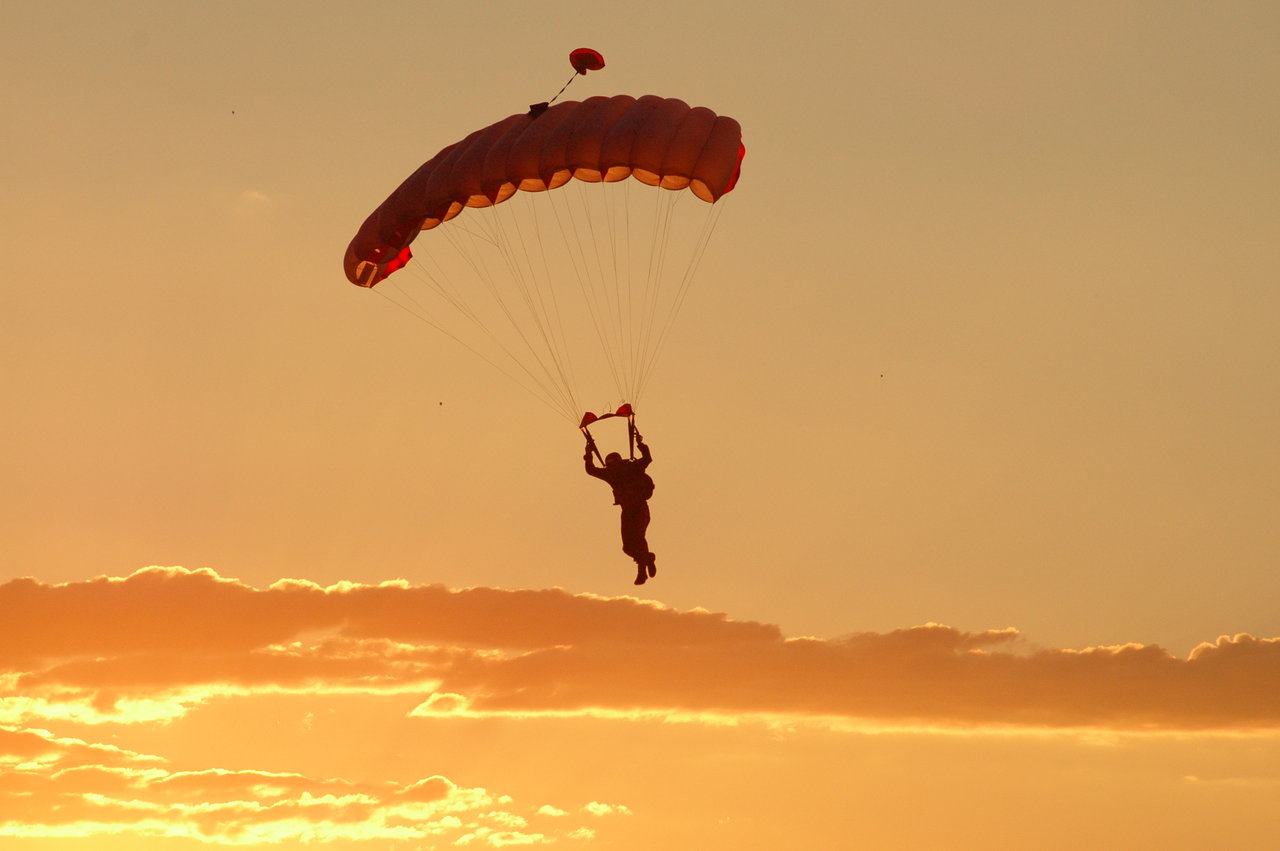
Hanuman's aircraft passed over the island of Lanka.  With the array of cameras mounted to the bottom of the plane, he was able to pinpoint Sita's location.  He dove out the door, plummeted towards the ground, and executed several front flips.  Two minutes later, he was standing next to Sita, and every guard within a mile was dead.

"Follow me."

Hanuman's Flight
Image by Lachlan Rogers

They ran to the center of the gardens where the plane had just landed on the grass.  Sita and Hanuman jumped into the plane and were back to Ayodhya before a soul in Lanka noticed anything wrong.  Sita was so relieved to be home and she sprinted into Rama's arms.  Rama smiled and said, "thank goodness Ravana slipped up this time.  I was looking forward to annihilating him."  He nonchalantly reached over and pressed a giant red button.  Two miles away, fire and rock spewed from the Earth as a missile lifted into the sky.  It detonated three hundred feet above the surface of Lanka with a blinding flash.  Two seconds later, all the blind men on Lanka were dead.

Rama's Missile Launch
Image from Wikipedia

The Earth shook and so did the gods.  "Rama, you have disgraced yourself by not meeting Ravana in battle and saving Sita yourself.  For this, you must die."  With a strike of lightning, Rama was dead.

Sita weeped for a fortnight.  They finally placed Rama's body on a pyre and the fire immediately consumed him.  Without a thought, Sita jumped into the fire with Rama.  She screamed in agony for an hour.  The wood was entirely consumed and yet Sita still burned.  Finally, she collapsed in a heap of ashes.  They say if you go to the field where she burned, you can still hear her screams reverberating off every surface.  Hanuman, now jobless and homeless spent the rest of his life in poverty.  Without a leader, Ayodhya fell into ruins.  Lanka is still absent of monkey life; the nuclear blast provides too many bananas of radiation.


Author's Note:  During a discussion in Sita Sings the Blues, one of the commentators mentions that it would have saved a lot of trouble if Hanuman had saved Sita when he was in Lanka.  I thought this was an interesting idea, and I wanted to explore what could have happened if Hanuman did save Sita.  The first half of the film focuses on Rama and Sita's relationship and leaves out many other details and stories.  The entire second half of the film is about Sita's exile after Rama sends her into the wilderness.  Sita Sings the Blues exaggerates Rama's abandonment of Sita.  I wanted to take this a step further and portray Rama as good-for-nothing.  Sita's abduction sets the direction for the rest of the story; I added the clock and dog as omens to foreshadow her eventual death.  My brother enjoys watching the show Airplane Repo.  I used their crazy methods of repossessing planes as an inspiration for Hanuman's rescue of Sita.  If you didn't follow the link, I used one of my favorite quotes from Breaking Bad.  I also referenced bananas as a benchmark for radioactive levels.  I thought it was fitting since the hero of the story is a monkey.

Bibliography:
Sita Sings the Blues by Nina Paley. Website: YouTube

Wednesday, September 9, 2015

Week 3 Storytelling: Vali's Account

My brother betrayed me.  Let me tell you the story:

Sugriva and I have been very close for as long as I can remember.  Little did I know that ever since I was crowned, he plotted to steal my throne.

I had just returned from my morning workout.  Each day, I toss a mountain into the air for exercise.  Great strength building.  I highly recommend it.  Anyways, I took a side road to get back home.  Just before I reached the gate, a dart stung the back of my neck.  Mayavi.  The rakshasa had been harassing the people of my kingdom for weeks.  Today he chose the wrong person to attack.  I signaled a guard and loosed a shaft.  The arrow stuck him in the shoulder.  Although he was almost 100 yards away, I could see a change in his face.  He wasn't surprised that he was injured, but rather he was stunned that it was me.

Without another thought, I leapt forward to pursue my enemy.  It was time that I rid the world of the wretch.  He knew that he could not match my strength head-on, so he Mayavi leaped backward and ran for the hills.  Behind me I heard Sugriva's footsteps as he came to join me in battle.  We ran for nearly an hour until Mayavi darted into a small cave.  Since he wasn't going anywhere, I stopped to consult Sugriva.

"Stay here and guard the entrance until my return.  The rakshasa will never again see the light of day."

"I'll await your return, brother."

I dashed into the cave.

Cave Entrance
Photo by Ben Ashmole


For the next year, I chased that demon.  The cave spanned for miles, and I covered every every inch until I reached the end.  Mayavi was nowhere to be seen.  He had somehow managed to sneak past me.  I spun around in a flash and sprinted back to the opening.  There he was, giddy at his apparent freedom.  I grabbed his shoulder and thus commenced a brawl like never before.  He stabbed me in the gut and dropped me to the ground with another blow.  I remember the wicked smile on his face as he gloated over his victory.  He relished in my defeat, with a spear in his right hand, ready to pierce my heart.  The pause was his last mistake.  I grabbed his ankle, pinned him to the ground, wrapped my fingers around his head, and crushed his skull with my bare hands.  It cracked like an egg, and his blood flowed in a stream to the entrance of the cave, bits of brain bobbing like little boats on a mighty river.

I now wish that Mayavi had killed me when he had the chance.  It took me three days to recover the strength that I needed to stand.  Had I not gotten up, I never would have known that my brother abandoned me.  I walked towards the mouth of the cave, but I realized that it was gone.  Had I angered the gods so that they commanded the Earth to swallow me whole?  I dug fiercely to escape, fueled by my desire to see Sugriva again.

When I reached the surface, the forest was dead quiet.  What was wrong?  Where was Sugriva?  I mustered all the strength I had left to make it back to the city.  I had to know what happened to my brother.  Stunned silence seemed to follow me as I made my way to the castle.  I entered the throne room, and there he was.  Sugriva sat upon my chair with a crown upon his head.  It dawned upon me: Sugriva had trapped me in the cave so that he might take my place as king.  Finally, my strength failed and I collapsed, unconscious on the floor.

When I woke, I thought it must have been a dream.  That is, until Sugriva walked into the room, a golden crown still on his head.  He gave me every excuse in the book.  According to him, he had spent an entire year watching over the cave until he saw blood issuing from the entrance.  He thought I was dead and covered the cave with a mountain.  Even if is was the truth, he had still committed treason by leaving me there.  The punishment for treason is death, but I could not kill my own kin, so I gave him until sundown to leave the city.

That brings us today.  Sugriva has been in exile for several years now, but apparently he has not given up on ruling the Vanara.  He has made a new ally, Rama, and now he challenges me to a duel.  I cannot refuse.  Tomorrow I battle my brother.  May the gods be with us both.


Author's Note:  I chose to write this story because I was interested in Sugriva and Vali's relationship.  Rama sides with Sugriva after only listening to Sugriva’s side of the story. Rama thinks that Vali is unreasonable for banishing his brother, but I was not certain that Sugriva was in the right. Since we did not hear from Vali himself, I wanted to tell his side of the story.  As Vali’s account, I thought this particular story was well suited for first-person.  Last week, I created entirely new characters for the retelling, but this week I wanted to tell the story with the Ramayana characters themselves. This made writing more difficult because I did not have as much room to change details. Although, since we don’t have as many details about the fight in the hole, I had more room to add my own details for that part of the story. Mayavi's death was inspired by a Game of Thrones scene [spoilers] that I just watched for the second time last night. Although, I mention Vali’s strength and make it clear that he is the better warrior of the two, the amount of time that he avoids capture suggests that Mayavi has some unexpected advantage.


Bibliography:

"Sugriva's Story" by Geraldine Hodgson, from Rama and the Monkeys (1903). Web Source: PDE Ramayana.

Thursday, September 3, 2015

Week 2 Storytelling: Aarabhi and Angga

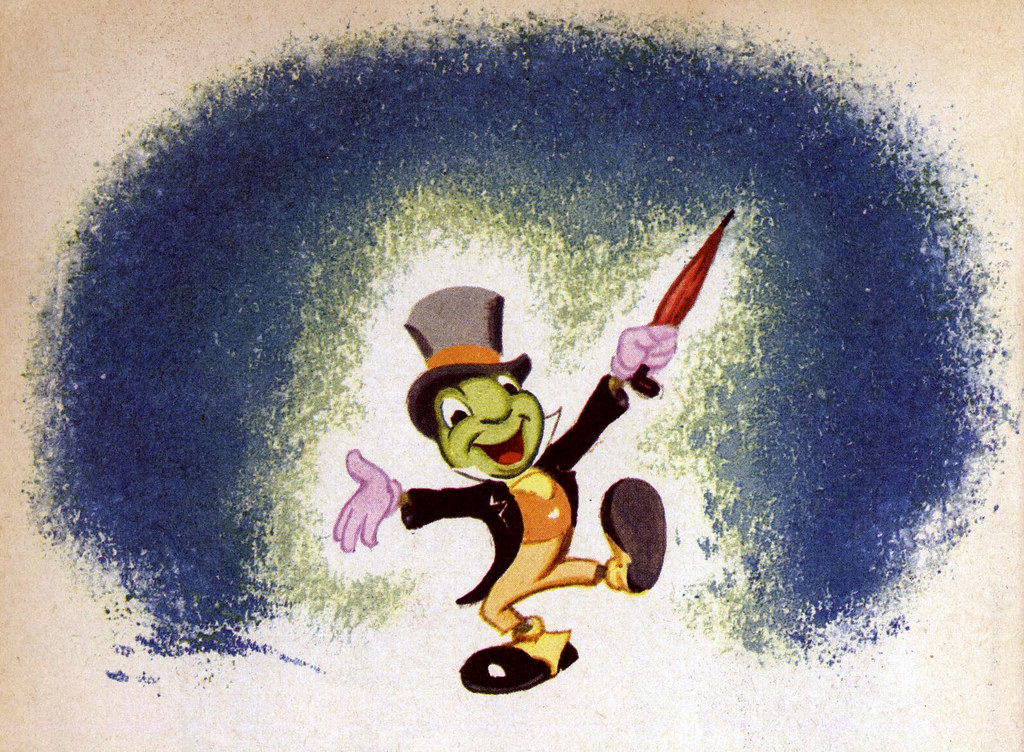
Tick.  Tick.  Tick.  Tick.  Ajnamasa had never seen anything like it.  Before him was a giant wooden tower.  A weight swung back and forth, back and forth.  There was a circle of numbers at the top of the tower, and two large metal pointers crept slowly around the numbers.  A cricket wearing a top hat sat on the ledge just below the numbers.  How peculiar.  Ajnamasa had never seen a cricket wearing a top hat.  Most of the crickets he knew wore baseball caps.  To Ajnamasa's left was a giant mountain, or a plateau, or a lot of plateaus stacked on top of each other.  Either way, he hadn't brought his climbing gear so he continued forward.

A Top Hat
Image by Tom Simpson


Meanwhile, Sara of the House Attini, First of Her Name, Queen of the Pheidoles, Lady of the Seven Hills and Protector of the Realm was visiting the granary to inspect the stores.  A recent drought made finding food very challenging.  Just a few hours ago she had sent sixty thousand of her sons to scout a nearby house for food.  She prayed to the Great Talpidae that they would be successful.

Ajnamasa could tell that this is where the humans kept their food.  He imagined that this is what a French bakery smelled like.  He remembered the wonderful crumbs of a baguette he ate when he was still too small to reach the ration dispenser.  A giant bell ringed.  Ajnamasa found a piece of chicken on the floor.  While he was enjoying his barbecue chicken, he heard footsteps behind him.  He turned around to see a a large man in a white uniform.  There was a red diamond on his shirt with white lettering that said something.  Ajnamasa squinted to make out "O... R... K... I... ... ..."  He was suddenly very tired.  His eyelids drooped and he fell asleep.

It had been three days since Queen Sara had sent the scouts and there had been no news so far.  She decided that it was time to send her granddaughter Nashua to discover where her uncles had disappeared to.  Two hours later, Nashua returned with a load of food and the bad news.  "They have all perished.  I looked for water to make the oblations which would send their souls to heaven, but there was none."  Queen Sara sunk to the ground in grief.  At least they found enough food to feed the kingdom.

The only way to send Queen Sara's sixty thousand sons to heaven was to bring the waters of the nearby River Angga to where they lay.  Sara ordered an enormous tunnel to be built to divert the water into the house.  Thirty thousand nights of Sara's reign came and went.  The Tunnel was still unfinished.  Nashua was crowned as queen and continued the project, but thirty-two thousand nights passed in her reign.  The Tunnel was still unfinished.  Pilida was crowned.  Thirty thousand nights came and went.  The Tunnel was still unfinished.
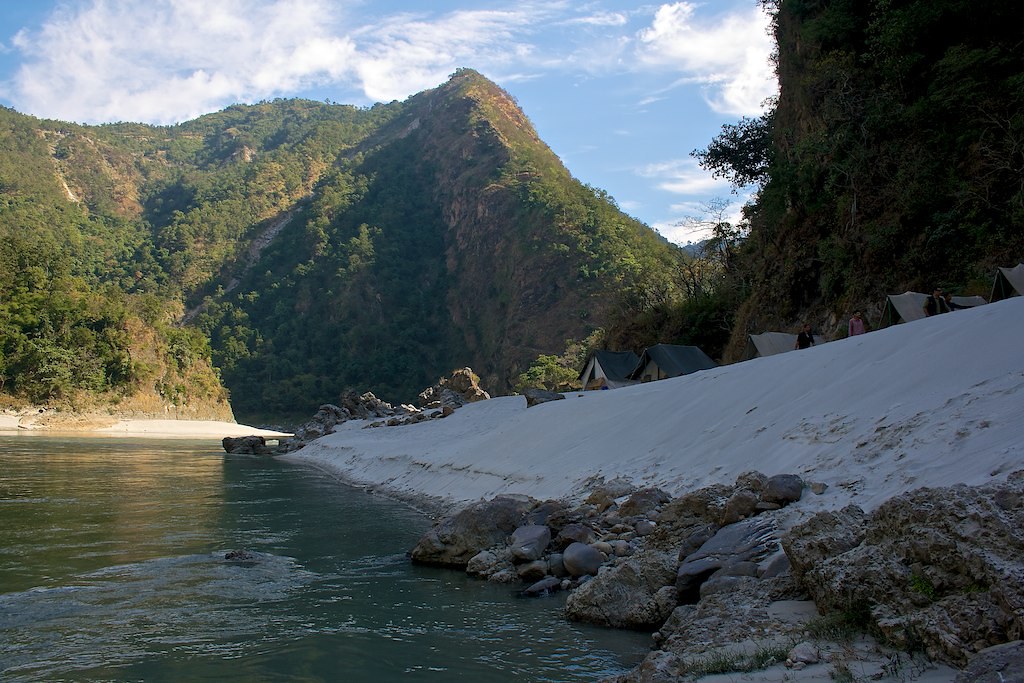
The River Angga
Image by amitd

After Pilida's death, Aarabhi was crowned.  Queen Aarabhi directed half of her subjects to work on the wall while the other half devoted themselves to adorning the Great Talpidae with gifts.  Now Talpidae was very pleased.  He had followed the progress of the Tunnel since its inception, and he decided now was his time to help.  With his mighty claws, Talpidae flew forward through the dirt until he arrived at the River Angga.  The torrent rushed through the Tunnel and into the house where it washed over the remains of Queen Sara's sixty thousand sons, and their souls ascended to heaven.

The Great Talpidae
Image from Wikipedia

Author's Note:  I wanted to retell the story of Bhagiratha and Ganga because I find the genealogy absolutely fascinating.  I felt that ants could relate to having sixty thousand children, so I decided to tell the story through their point of view.  It also made sense that, in order to redirect the flow of a river, ants would attempt to dig a tunnel.  Most of the names that I used were partial anagrams from the original story or actual scientific categories of real animals.

Bibliography:

"Bhagiratha and Ganga" by John Campbell, from The Great Indian Epics (1894). Web Source: PDE Ramayana.

Monday, August 17, 2015

Week 1 Storytelling: Keebler's Journey Into the Wild

Keebler had had enough.  Patrick was in the corner attempting to play darts, but only succeeding at making holes in the tavern wall.  Margaret was sipping on her tall ale that she stole from behind the counter when the bartender was distracted.  They had traveled with him across the Belegaer Sea and were the best friends that he had.  But they were still elves.  They reminded him of his life at home, sitting at his desk in Chemical Fudge Analysis, learning how to perform a Fourier Transform.  Supposedly, the transform could be used to filter bitterness out of the fudge, but they had only performed simulations.  That is, whenever Dr. Debbie wasn't droning on through notes about Chebyshev something or another.  Not to say that cookie making was all bad, but Keebler had no real experience.  He only ate two cookies in his life, but that's a story for later.  Now was time for adventure.  Ever since he turned two hundred years old, he longed to travel into the wild by himself and discover what it meant to truly live.  Sitting across the table from him, a dwarf whispered of a lone cabin in the wilderness.  It sounded perfect: a place miles from any civilization, somewhere he could truly be alone.  In a matter of minutes it was settled.  He swung his pack, filled only with a few pounds of rice and a container of spice, over his shoulder and quietly slipped out the door.

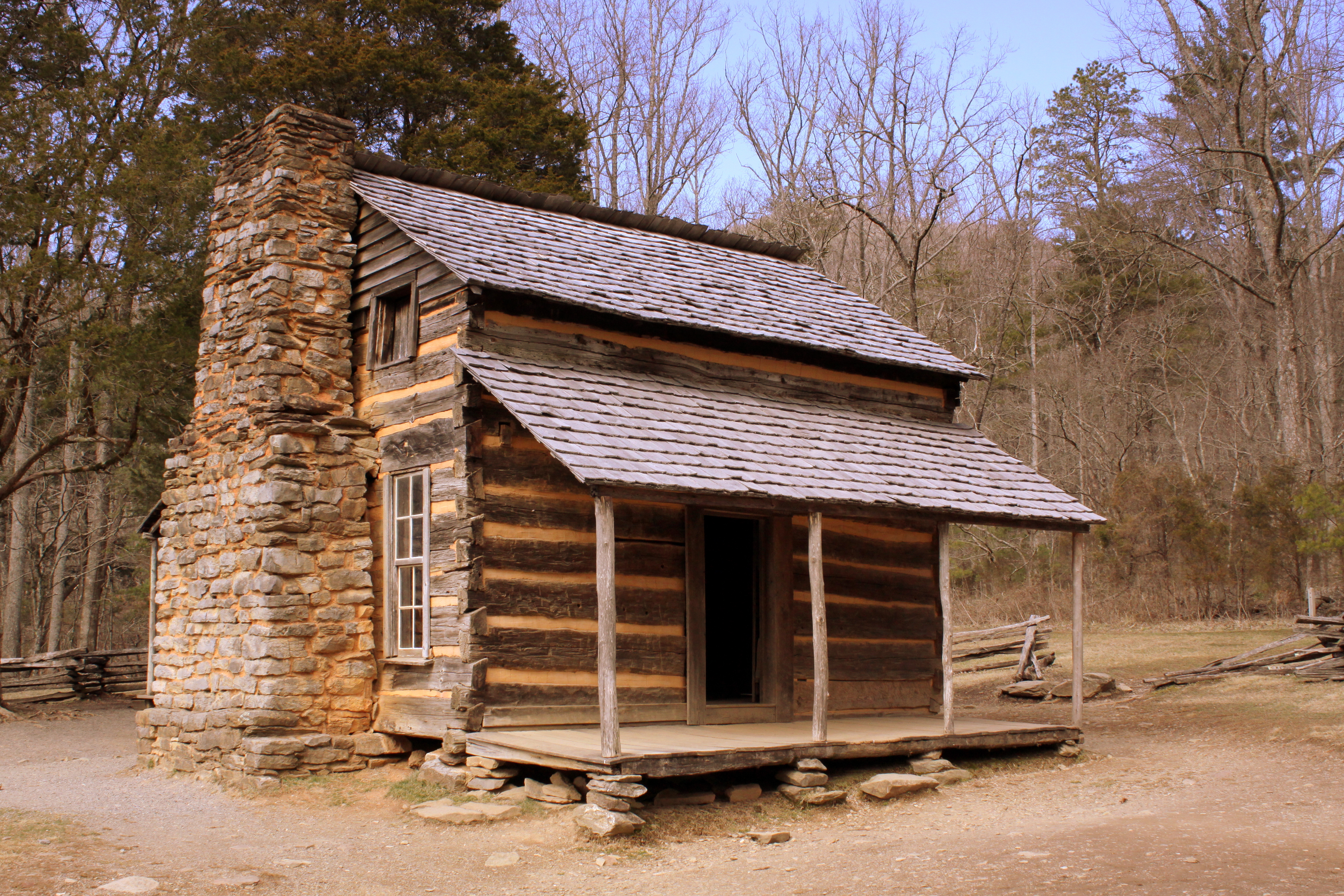
Keebler headed due South.  Initially, the going was easy.  The ground was flat and even after dark the sunflowers lit his path through the meadow.  However, it wasn't long until he was trudging uphill in the black of night.  On his right, he saw a gnarled tree.  Its leafless branches juxtaposed the boughs of the others.  It left him with a sickening feeling in his stomach, but he pressed on.  Soon, he found a clump of three trees and decided to make camp for the night.  He pulled the spice jar out of his bag to make dinner, but he realized was too tired to cook, so the little elf swept up pine needles to form a bed, curled up, and was quickly asleep.

As an elf, Keebler had an astute sense of hearing.  Had he been paying attention, he would have noticed a cacophony of screeches, occasionally broken up by the last screams of tortured men.  Yet, Keebler's thoughts were only on the little house in the woods and the freedom of finally being alone.

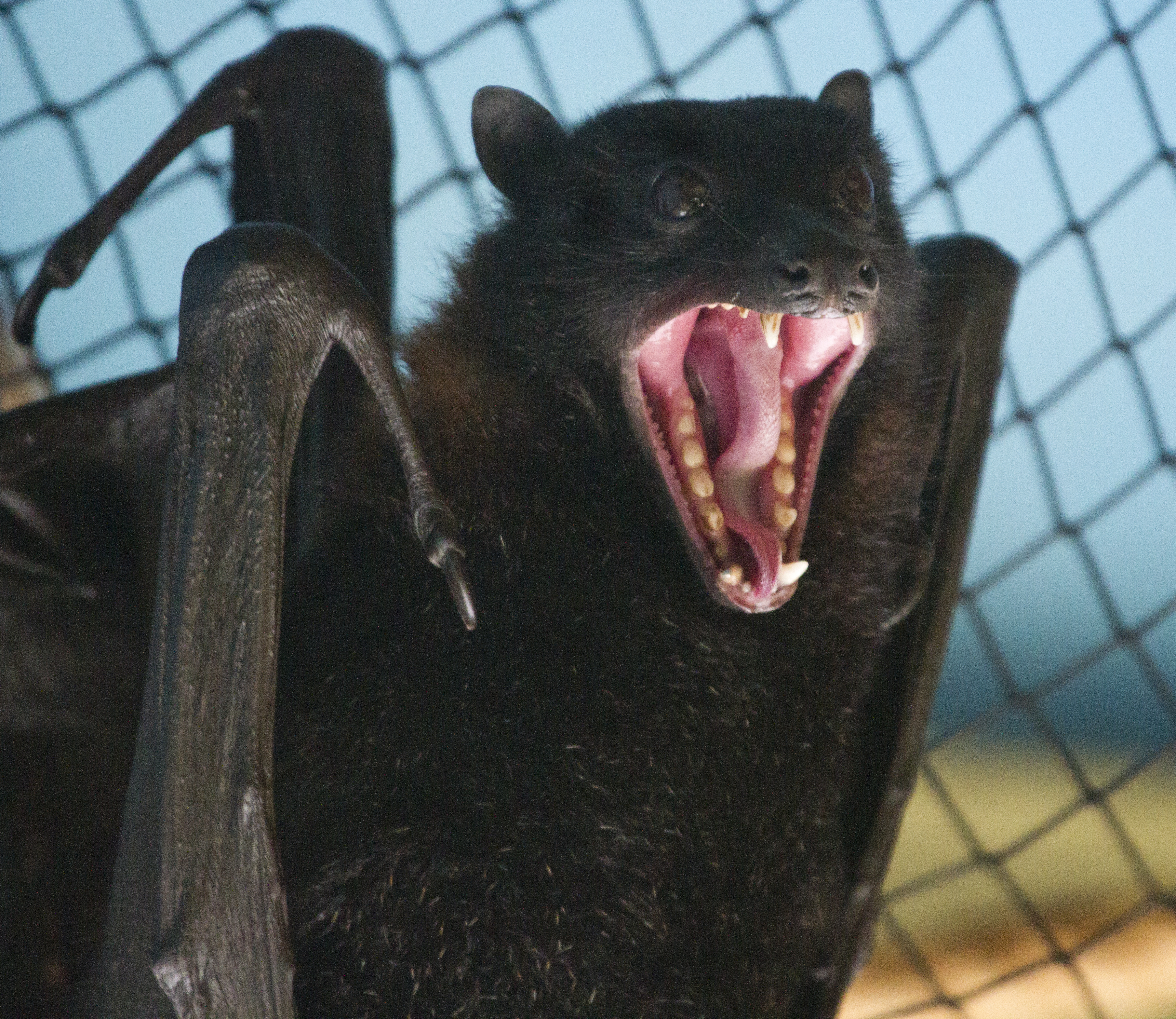
The screeching gradually became louder and louder, but Keebler was in a dreamless sleep.  He would soon awake inside a nightmare.  The vampire bats surrounded him.  Nearly two thousand in number, the trees would have appeared black instead green in the light.  All at once they enveloped him, claws grabbing every hold on his body.  The bats lifted him off the ground and began to carry him away.  Despite his thrashing, there was nothing that Keebler could do.  After about five minutes Keebler saw a building in the distance.  Alit by strikes of lightning, he could see monsters who looked like pieced together men with their heads held in place by pins through the neck.  The building looked like it used to be a great place of science.  Now, it was a decrepit laboratory of an evil genius.


Keebler knew he had to escape now or never.  In a flash he yanked off the lid of the spice jar that was still in his hands and tossed the spice into the fray of bats.  Instantly immobilized by the garlic powder in the spice, the vampire bats dropped Keebler to the ground.  He sprinted away to the Southwest and kept running until dawn when he finally stopped to eat some flavorless rice.

After his meal, Keebler continued South.  This time, he was paying attention and heard shouting in the distance.  It was a group of penguins who were arguing about which color of rocks should line their nests.  One group liked blue, the other wanted red.  Keebler just shook his head and left the angry birds to their quarrel.

Two hours later, he was finally there.  He opened the door to the cabin in the woods and sat down.  He ate all three bowls of porridge that someone had graciously laid out for him.   Now full, he trotted upstairs and laid down in the smallest of three beds.  Overcome by postprandial somnolence, Keebler quickly fell asleep.


Author's Note:

This story takes place in the Map of the Area Surrounding our Holiday Home by Tom Gauld.  Keebler travels South in the middle of the map, encountering a spooky tree, vampire bats, an abandoned laboratory, and angry birds before he arrives at the cabin.  Keebler is a character I invented for a game of Dungeons and Dragons (I must admit).  I tossed elements from other stories including The Lord of the Rings, Frankenstein, Into the Wild, and Goldilocks into his world.