Monday, September 14, 2015

Styles Brainstorm: Avatars of Vishnu

Topic.  My storybook will be about the different avatars of Vishnu.  In particular, I want to focus on the stories of Matsya, Rama, and Kalki.  Matsya is Vishnu's first avatar of the Dashavatara.  He is a fish who grows uncontrollably and then warns Satyavrata of a great flood.  Kalki, on the other hand is Vishnu's last incarnation and has not yet appeared.  Kalki bring the end times and is said to arrive atop a white horse and wield a flaming sword.

Bibliography:

1. "Matsya, the Lord's Fish Incarnation."  Website: bhagavata.org 
2. Kalki.  Website: Wikipedia.
3. PDE Ramayana. Website: Images and PDE Epics.


Possible Styles:

Bedtime Stories.  This is a very simple way to frame the different stories, but I think there are some ways to spice it up.  Similarly to "Where the Wild Things Are," the child who was listening could enter the story in his dreams.  The tale would start as a bedtime story, and as the kid falls asleep, he would be transported into the world itself.

Vishnu's Perspective. Since I will be focusing on the avatars of Vishnu, I can tell the stories as a frame tale from Vishnu's perspective.  He can describe his reasons for each avatar and tell the readers about his experiences.  These can be in the form of letters or set as a story told to a mortal hero.

Journey.  The stories could be told by a man who travels to a significant place where each of Vishnu's avatars visited and has an encounter with each of them.  This would be a neat way to include a map.  This would be a combination of the traveling India topic and the avatars of Vishnu.

The Earth as a Storyteller.  I can tell the story from the perspective of different objects.  The ocean could tell the story of Matsya and the forest could whisper Rama's story.  This could be set up with a frame tale or just be an anthology of different stories told in the same style.  For a frame tale, the Earth as a storyteller could be combined with the idea of the journey.  A man would travel to different areas of the country and hear the stories from the Earth instead of encountering the different avatars themselves.  As he dives into the ocean, he has a vision of Matsya's story.

All the above.  Vishnu's avatars become more and more evolved with each incarnation.  I think it would be fun to follow a man who experiences a different and more evolved avatar as he grows himself.  First, as a child, he would enter Matsya's world through his dreams.  Then, when he is traveling India, he hears the story of Rama from a tree in the forest.  As he dies, he hears from Vishnu himself as he becomes Kalki to bring the end times.


Avatars of Vishnu
Image from Wikipedia

Wednesday, September 9, 2015

Week 3 Storytelling: Vali's Account

My brother betrayed me.  Let me tell you the story:

Sugriva and I have been very close for as long as I can remember.  Little did I know that ever since I was crowned, he plotted to steal my throne.

I had just returned from my morning workout.  Each day, I toss a mountain into the air for exercise.  Great strength building.  I highly recommend it.  Anyways, I took a side road to get back home.  Just before I reached the gate, a dart stung the back of my neck.  Mayavi.  The rakshasa had been harassing the people of my kingdom for weeks.  Today he chose the wrong person to attack.  I signaled a guard and loosed a shaft.  The arrow stuck him in the shoulder.  Although he was almost 100 yards away, I could see a change in his face.  He wasn't surprised that he was injured, but rather he was stunned that it was me.

Without another thought, I leapt forward to pursue my enemy.  It was time that I rid the world of the wretch.  He knew that he could not match my strength head-on, so he Mayavi leaped backward and ran for the hills.  Behind me I heard Sugriva's footsteps as he came to join me in battle.  We ran for nearly an hour until Mayavi darted into a small cave.  Since he wasn't going anywhere, I stopped to consult Sugriva.

"Stay here and guard the entrance until my return.  The rakshasa will never again see the light of day."

"I'll await your return, brother."

I dashed into the cave.

Cave Entrance
Photo by Ben Ashmole


For the next year, I chased that demon.  The cave spanned for miles, and I covered every every inch until I reached the end.  Mayavi was nowhere to be seen.  He had somehow managed to sneak past me.  I spun around in a flash and sprinted back to the opening.  There he was, giddy at his apparent freedom.  I grabbed his shoulder and thus commenced a brawl like never before.  He stabbed me in the gut and dropped me to the ground with another blow.  I remember the wicked smile on his face as he gloated over his victory.  He relished in my defeat, with a spear in his right hand, ready to pierce my heart.  The pause was his last mistake.  I grabbed his ankle, pinned him to the ground, wrapped my fingers around his head, and crushed his skull with my bare hands.  It cracked like an egg, and his blood flowed in a stream to the entrance of the cave, bits of brain bobbing like little boats on a mighty river.

I now wish that Mayavi had killed me when he had the chance.  It took me three days to recover the strength that I needed to stand.  Had I not gotten up, I never would have known that my brother abandoned me.  I walked towards the mouth of the cave, but I realized that it was gone.  Had I angered the gods so that they commanded the Earth to swallow me whole?  I dug fiercely to escape, fueled by my desire to see Sugriva again.

When I reached the surface, the forest was dead quiet.  What was wrong?  Where was Sugriva?  I mustered all the strength I had left to make it back to the city.  I had to know what happened to my brother.  Stunned silence seemed to follow me as I made my way to the castle.  I entered the throne room, and there he was.  Sugriva sat upon my chair with a crown upon his head.  It dawned upon me: Sugriva had trapped me in the cave so that he might take my place as king.  Finally, my strength failed and I collapsed, unconscious on the floor.

When I woke, I thought it must have been a dream.  That is, until Sugriva walked into the room, a golden crown still on his head.  He gave me every excuse in the book.  According to him, he had spent an entire year watching over the cave until he saw blood issuing from the entrance.  He thought I was dead and covered the cave with a mountain.  Even if is was the truth, he had still committed treason by leaving me there.  The punishment for treason is death, but I could not kill my own kin, so I gave him until sundown to leave the city.

That brings us today.  Sugriva has been in exile for several years now, but apparently he has not given up on ruling the Vanara.  He has made a new ally, Rama, and now he challenges me to a duel.  I cannot refuse.  Tomorrow I battle my brother.  May the gods be with us both.


Author's Note:  I chose to write this story because I was interested in Sugriva and Vali's relationship.  Rama sides with Sugriva after only listening to Sugriva’s side of the story. Rama thinks that Vali is unreasonable for banishing his brother, but I was not certain that Sugriva was in the right. Since we did not hear from Vali himself, I wanted to tell his side of the story.  As Vali’s account, I thought this particular story was well suited for first-person.  Last week, I created entirely new characters for the retelling, but this week I wanted to tell the story with the Ramayana characters themselves. This made writing more difficult because I did not have as much room to change details. Although, since we don’t have as many details about the fight in the hole, I had more room to add my own details for that part of the story. Mayavi's death was inspired by a Game of Thrones scene [spoilers] that I just watched for the second time last night. Although, I mention Vali’s strength and make it clear that he is the better warrior of the two, the amount of time that he avoids capture suggests that Mayavi has some unexpected advantage.


Bibliography:

"Sugriva's Story" by Geraldine Hodgson, from Rama and the Monkeys (1903). Web Source: PDE Ramayana.

Monday, September 7, 2015

Reading Diary B: Public Domain Ramayana

65. Hanuman and the Mountain - I thought it was a powerful image to see Hanuman carry an entire mountain back.  Just as when he destroyed the grove of trees where Sita was, Hanuman lacks patience in this instance.  However, he makes up for this with pure might.

Hanuman carrying the mountain
Image from Images Blog


71. Ravana's Death - Ravana was finally destroyed by a Brahma weapon.  This got me thinking a lot about the weapons in the Ramayana.  These empyreal weapons are known as astra.  Indrajit uses a naga-weapon against Rama's army, and he receives a Brahma weapon from the Fire-god, Agni.  When Hanuman was captured, it was only accomplished with a Brahma weapon.   According to Wikipedia, there are three different types of Brahma weapons, the particular weapon that is used in the Ramayana is the Brahmastra.  The Brahmastra is used to completely annihilate an enemy.  It can only be defended against with another Brahma weapon, it never misses, and it is equated with a nuclear weapon.  This leaves me wondering:  How did Hanuman survive a Brahmastra, and why did it bind him instead of slaying him?  Also, why did Rama wait for so long to use the Brahmastra instead of finishing the battle quickly with it?

Modern Day Brahmastra
Image from Wikipedia


73. Sita and Rama - "What man of high degree receives back a wife who hath lived long in another's house?"  What?  It's your fault that she was abducted Rama.

78. Valmiki's Hermitage - Rama does it again.  Sita has already endured the fire to prove her purity.  I don't understand why he must cast her away again.  Sugriva, for whom Rama killed Vali, was banished on more rightful grounds than Sita.  Could he not order a statue of Sita surviving the flames to be cast so that everyone would remember?  If he really loved her, then why did he have to send her away where she raised his children alone?  Maybe my modern-day western perspective clouds my vision.

Reading Diary A: Public Domain Ramayana

42. Sugriva's Story - Sugriva's story about how he came into conflict with his brother Vali is particularly tragic.  For a year, Sugriva stands watch over the hole where Vali descended to fight an enemy.  When Sugriva sees blood issue from the cave, he believes his brother is dead and covers the mouth of the hole with a mountain before he leaves to rule the kingdom.  When Vali finally escapes from the hole, he banishes Sugriva for abandoning him.  While Rama takes Sugriva's side, to me, this seems like both Sugriva and Vali are at fault.  Sugriva broke his vow to guard the hole and did not seek to avenge his brother.  Vali refused to forgive his brother and made the situation worse by banishing him.

49. Sampati and Jatayu - Both Sampati and Jatayu are extremely helpful to Rama.  Sampati tells that Sita was taken to Lanka.  He also tells the story about how he lost his wings.  Jatayu fainted when the two were racing and Sampati's wings were burnt off when he tried to protect his brother from the sun.

50. Hanuman's Leap - Impressively, Hanuman leaps 100 leagues over to Lanka.  He even tears through a rakshasi on the way.  This story was interesting because of Hanuman's feat and the water monster.  When I Googled, "water rakshasa," all that I found was information on a game called Summoners War.  Upon further research, Hanuman jumped through Surasa, a naga or serpent.  Surasa is the daughter of Daksha who is the son of Brahma, god of creation.

Hanuman's Leap
Image from Wikipedia


57. The Burning of Lanka - Hanuman is not a good spy, but he is a good saboteur.  He is captured when he destroys the Ashoka grove.  Now, not only does he escape, but he burns half of Lanka to the ground in the process.  Just a few years ago, a new species of monkey, called the fire-tailed tiki monkey, was discovered.  I wonder if they are related to Hanuman.

Friday, September 4, 2015

Topics Brainstorm

1. Possible Topic: Traveling India. This particular idea is very enticing to me because I enjoy traveling so much.  When I was reading the Ramayana, I was intrigued to find out that there is a Ganges river in India.  I think it would be interesting to map the places important to the stories to put them in context.
Research so far. There is an entire Wikipedia disambiguation page for places in the Ramayana.  The ancient city of Ayodhya still exists.  It might be interesting to write a storybook that combines the city today with its ancient version.

In the city of Ayodhya
Image by Ramnath Bhat


2. Possible Topic: Rakshasas. Rakshasas have been a big part of the Ramayana so far, so I imagine there is a lot more interesting stories to go along with them.  I also think it is interesting that someone can be cursed to live as a rakshasa as Viradha was.
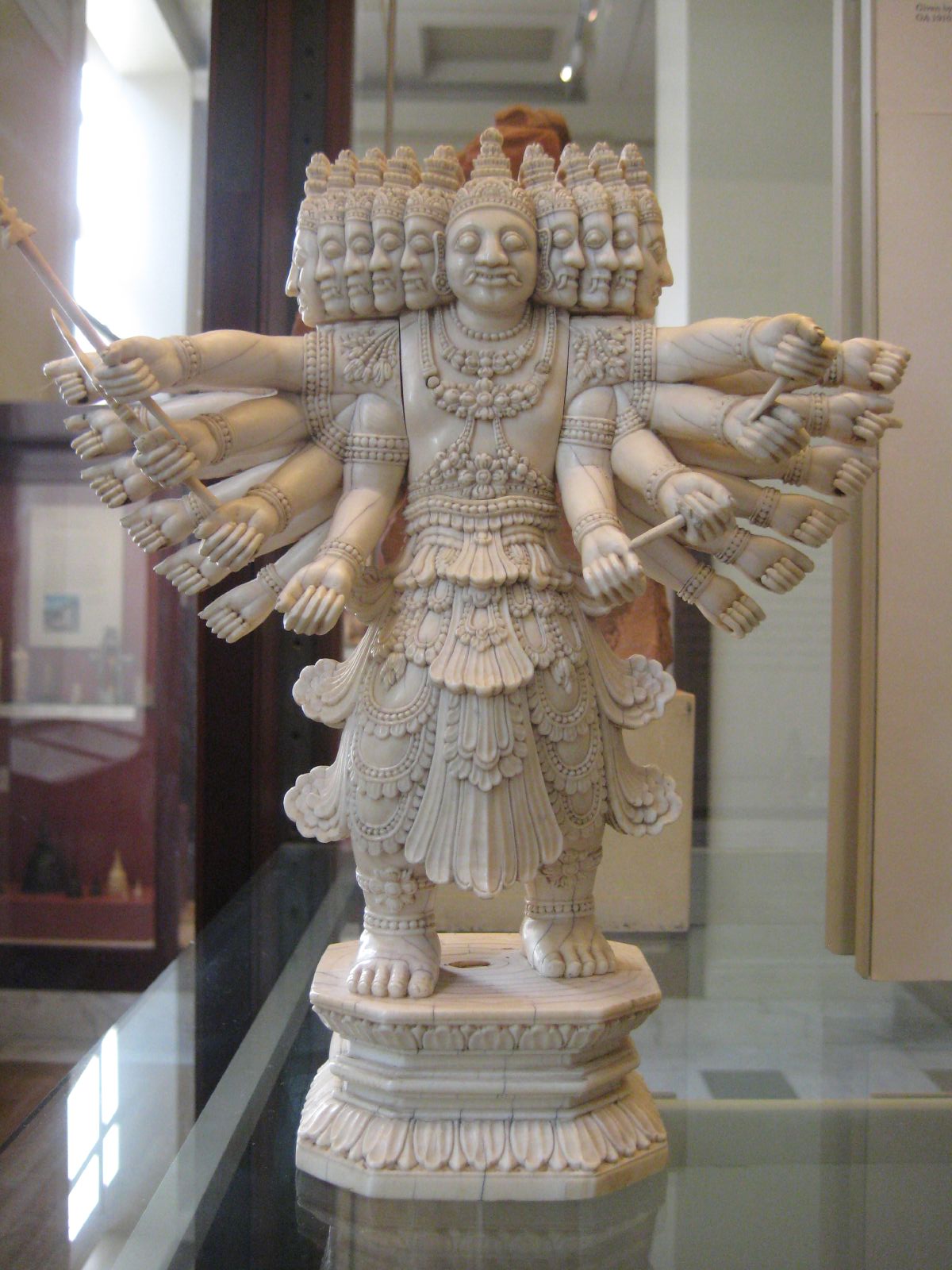
Research so far. All rakshasas we have read about so far have been evil, but apparently this is not a universal trait.  Ravana's multiple heads make him intriguing as well.  He is an especially distinctive stick figure in my notes.  Because there are so many rakshasas, there would be plenty of material to use in a storybook.

Ravana
Image from Wikipedia


3. Possible Topic: Avatars. From the Ramayana reading, I know that Rama is the avatar of Vishnu and Sita is the avatar of Lakshmi.  I've never heard the term avatar used to refer to an incarnation of a god on Earth.  I think this topic is really interesting because I can learn about a specific god through the stories of his avatars on Earth.
Research so far.  I am most interested in focusing on the avatars of Vishnu.  According to the Wikipedia page, Vishnu has 10 avatars also known as the Dashavatara.  I find it interesting that with each incarnation, Vishnu's avatar's become more evolved.  His first avatar is Matsya, a fish.  Then he is a tortoise, a boar, a half man half lion, dwarf, and then a man.  I feel like this particular topic has a lot of potential directions.  I could tell a storybook that ties together themes or morals from several of these stories, or I could have Vishnu's avatars interact in some way.

4. Possible Topic: Monkeys. This is a little more specific than the animal characters listed in the suggested topics, but monkeys seem to be very recurring so far.  I was also impressed by the image shown below of Rama building the bridge.
Research so far.   It looks like the monkeys in the Ramayana are referred to as the Vanaras.  It is also unclear whether the Vanaras were monkeys or forest dwelling people.  In addition to Hanuman, there is Sugriva, Vali, Makardhwaja  among others.  It seems that they are most prominent in the Ramayana but are also mentioned in the Mahabharata.

Rama Builds the Bridge


Thursday, September 3, 2015

Week 2 Storytelling: Aarabhi and Angga

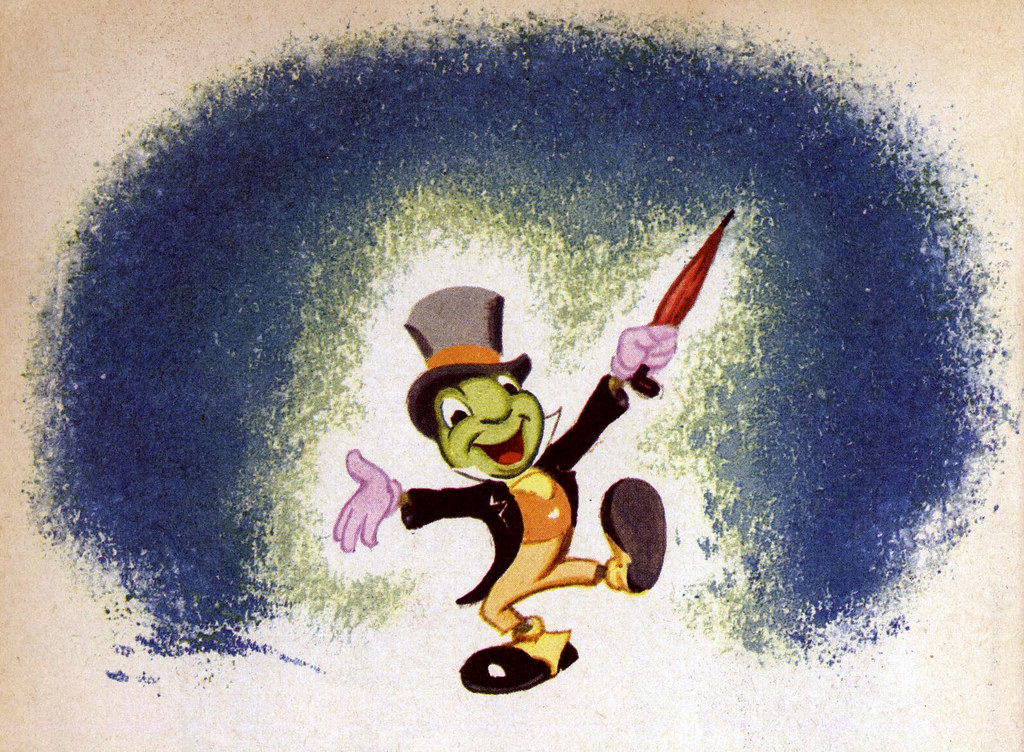
Tick.  Tick.  Tick.  Tick.  Ajnamasa had never seen anything like it.  Before him was a giant wooden tower.  A weight swung back and forth, back and forth.  There was a circle of numbers at the top of the tower, and two large metal pointers crept slowly around the numbers.  A cricket wearing a top hat sat on the ledge just below the numbers.  How peculiar.  Ajnamasa had never seen a cricket wearing a top hat.  Most of the crickets he knew wore baseball caps.  To Ajnamasa's left was a giant mountain, or a plateau, or a lot of plateaus stacked on top of each other.  Either way, he hadn't brought his climbing gear so he continued forward.

A Top Hat
Image by Tom Simpson


Meanwhile, Sara of the House Attini, First of Her Name, Queen of the Pheidoles, Lady of the Seven Hills and Protector of the Realm was visiting the granary to inspect the stores.  A recent drought made finding food very challenging.  Just a few hours ago she had sent sixty thousand of her sons to scout a nearby house for food.  She prayed to the Great Talpidae that they would be successful.

Ajnamasa could tell that this is where the humans kept their food.  He imagined that this is what a French bakery smelled like.  He remembered the wonderful crumbs of a baguette he ate when he was still too small to reach the ration dispenser.  A giant bell ringed.  Ajnamasa found a piece of chicken on the floor.  While he was enjoying his barbecue chicken, he heard footsteps behind him.  He turned around to see a a large man in a white uniform.  There was a red diamond on his shirt with white lettering that said something.  Ajnamasa squinted to make out "O... R... K... I... ... ..."  He was suddenly very tired.  His eyelids drooped and he fell asleep.

It had been three days since Queen Sara had sent the scouts and there had been no news so far.  She decided that it was time to send her granddaughter Nashua to discover where her uncles had disappeared to.  Two hours later, Nashua returned with a load of food and the bad news.  "They have all perished.  I looked for water to make the oblations which would send their souls to heaven, but there was none."  Queen Sara sunk to the ground in grief.  At least they found enough food to feed the kingdom.

The only way to send Queen Sara's sixty thousand sons to heaven was to bring the waters of the nearby River Angga to where they lay.  Sara ordered an enormous tunnel to be built to divert the water into the house.  Thirty thousand nights of Sara's reign came and went.  The Tunnel was still unfinished.  Nashua was crowned as queen and continued the project, but thirty-two thousand nights passed in her reign.  The Tunnel was still unfinished.  Pilida was crowned.  Thirty thousand nights came and went.  The Tunnel was still unfinished.
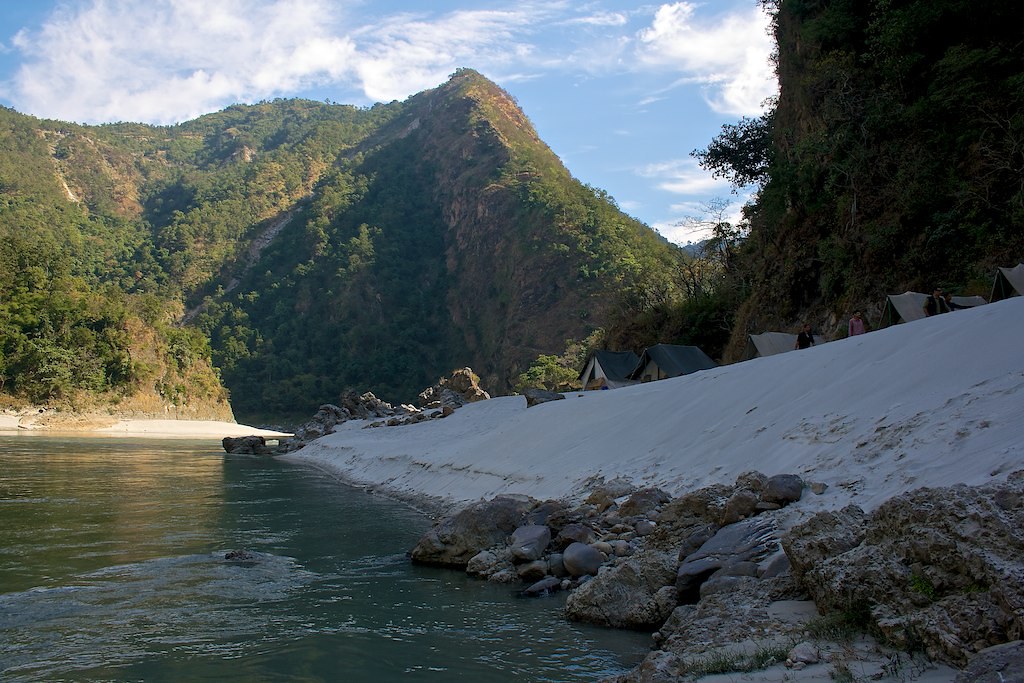
The River Angga
Image by amitd

After Pilida's death, Aarabhi was crowned.  Queen Aarabhi directed half of her subjects to work on the wall while the other half devoted themselves to adorning the Great Talpidae with gifts.  Now Talpidae was very pleased.  He had followed the progress of the Tunnel since its inception, and he decided now was his time to help.  With his mighty claws, Talpidae flew forward through the dirt until he arrived at the River Angga.  The torrent rushed through the Tunnel and into the house where it washed over the remains of Queen Sara's sixty thousand sons, and their souls ascended to heaven.

The Great Talpidae
Image from Wikipedia

Author's Note:  I wanted to retell the story of Bhagiratha and Ganga because I find the genealogy absolutely fascinating.  I felt that ants could relate to having sixty thousand children, so I decided to tell the story through their point of view.  It also made sense that, in order to redirect the flow of a river, ants would attempt to dig a tunnel.  Most of the names that I used were partial anagrams from the original story or actual scientific categories of real animals.

Bibliography:

"Bhagiratha and Ganga" by John Campbell, from The Great Indian Epics (1894). Web Source: PDE Ramayana.

Tuesday, September 1, 2015

Reading Diary B: Public Domain Ramayana

24. The Sandals - Not only is Rama a hero, but so are his brothers.  Bharata is humble enough to refuse the throne.  Instead, he rules from a location of exile and has his brother's shoes as the symbol of rule.  It is interesting that Rama's shoes are the symbol of authority.  It seems like he could have sent one of his many surplus weapons.


30. Battle with Khara - I really like the imagery when Khara's army is described as "black tremendous clouds rushing towards the rising sun."  His arrows "swept among the rakshasas like fire in a sun-dried forest."  This scene (along with much of the rest of the story) reminds me of a Tolkienesque fantasy.  I just image swarming armies of orcs closing in on a few hobbits and a wizard.  This seems to be Rama's most insurmountable challenge yet.  Yet he alone is able to defeat an army of thousands.

Rama defeats Khara


35. Ravana and Sita - The loss of Sita reveals weakness in Rama.  Until this point, Rama has been nearly without mistake and invincible.  But despite the warning from his brother about the deception of rakshasas, Rama chases after the golden deer and leaves Sita.  It shows that the only way to overcome Rama is through cleverness and wit; he is unbeatable through sheer force.  However, I expect that Ravana won't get away with his deed for long.


36. Jatayu - Jatayu seems like a very interesting character.  I'd like to know more about this bird that watches over the forest.